
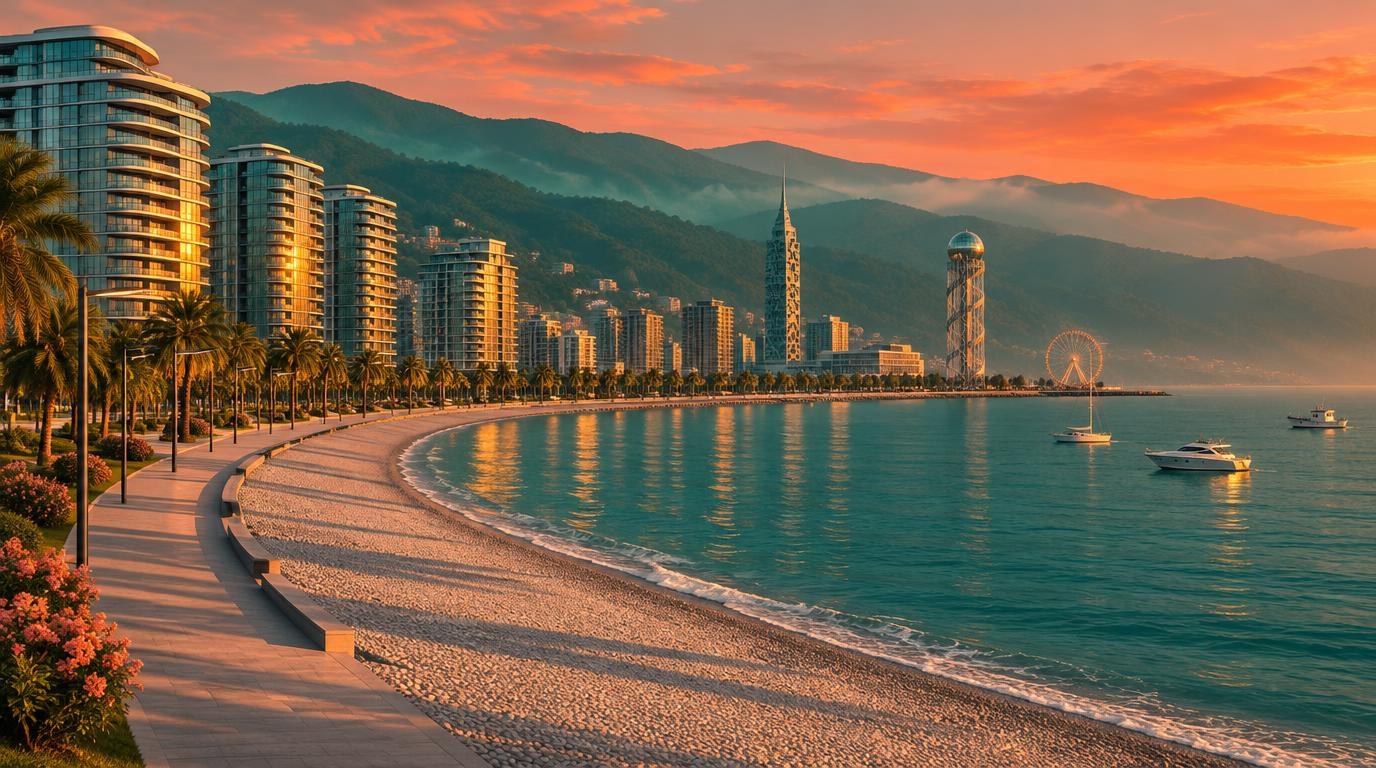
Batumi is a Black Sea city in Georgia with a long seafront, new apartment towers, and visa-free stays of up to one year for many passports. This guide covers internet speeds, monthly costs, coworking prices, the 2026 work permit rule, time zone fit, safety, and the best months to visit. Figures name their sources, and the visa section was checked on November 17, 2026.
How Fast Is the Internet in Batumi?
Fixed internet in Georgia is improving, and the numbers depend on who measures and when. The sources below use different methods, so they are not directly comparable.
- National fixed median (July 2024): About 20 Mbps, according to a World Bank study of Ookla test data that Georgia’s communications regulator published. In that study, 93% of tests came in under 30 Mbps, and the highest city median was 29 Mbps in Tbilisi.
- National fixed average (August 2026): 51.67 Mbps, ranked 112th, according to Ookla’s Speedtest Global Index as reported by Worlddata.info. The same page lists a mobile average of 146.98 Mbps.
- Central Batumi fiber: A February 2026 expat guide reports 50 to 100+ Mbps from Magti and Silknet, with slower copper lines in some older buildings.
- Plan price: Numbeo lists a broadband plan of 60 Mbps or more at about 42 GEL ($16) a month.
- Mobile data: The same expat guide puts unlimited plans at roughly 15 to 25 GEL ($6 to $10) a month, with strong coverage along the coast.
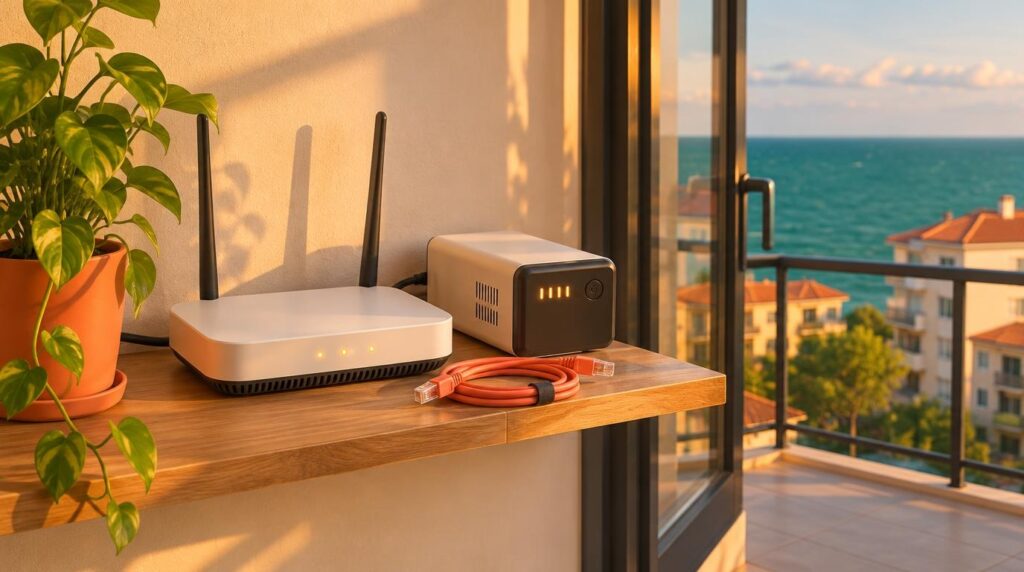
- Power: The guide says outages happen more often than in Tbilisi and suggests a small battery backup for the router.
A median and an average measure different things, so the 20 Mbps median and the 51.67 Mbps average do not directly conflict. Fiber in a central apartment may be enough for video calls, while older buildings vary. A host can share a recent speed test, and our guide explains how to check wifi speed before booking a stay. A local SIM with unlimited data is a sensible backup, since mobile speeds look strong.
What Does It Cost to Live in Batumi?
One expat guide from February 2026 puts one-bedroom rent at $300 to $500 a month in Batumi and $500 to $800 in Tbilisi. Numbeo, a crowd-sourced price site, gives local prices in lari. Its figures below were last updated on October 27, 2025, from 105 contributors. Dollar amounts use about 2.59 GEL per dollar, close to the National Bank of Georgia’s official rate in mid-November 2026.
- One-bedroom, city centre: 1,312 GEL ($507) a month.
- One-bedroom, outside the centre: 945 GEL ($365) a month.
- Utilities for an 85 m² apartment: 196 GEL ($76).
- Broadband, 60 Mbps or more: 42 GEL ($16).
- Meal at an inexpensive restaurant: 25 GEL ($10).
- Cappuccino: 7.76 GEL ($3).
- Monthly public transport pass: 20 GEL ($8).
- Gym membership: 137 GEL ($53).
Numbeo also estimates a single person’s monthly costs, excluding rent, at 1,425 GEL ($550). The two budgets below are examples built from these figures, not quotes from any landlord.
- Lower-cost month: Outside-centre rent of 945 GEL plus 1,425 GEL comes to 2,370 GEL, about $915.
- Mid-range month: Centre rent of 1,312 GEL plus 1,425 GEL comes to 2,737 GEL, about $1,057.
- With a dedicated coworking desk: A desk at 350 GEL lifts the lower budget to about 2,720 GEL ($1,050). A desk at 600 GEL lifts the mid-range budget to about 3,337 GEL ($1,290).
Other sources land in a similar range. The February 2026 expat guide gives $765 to $1,255 a month for a solo off-season budget, including $30 to $60 for health insurance. Expatlife.ai lists $900 to $1,400, and RemoteScore lists $886 for a comfortable month.
Summer changes the picture. The expat guide says rents can be 50% to 100% higher from June to September, and many landlords switch to nightly pricing. At those rates, a 1,312 GEL apartment could cost 1,968 to 2,624 GEL ($760 to $1,013). The guide suggests budgeting an extra 20% to 30% for daily spending in those months.
Numbeo data is crowd-sourced and more than a year old, so current listings are the better guide for rent.

Where to Live in Batumi
Batumi is compact, so areas differ less than in Tbilisi, according to the same guide. The rents below are one-bedroom prices in US dollars per month, as reported in February 2026.
- Old Town ($300 to $500): Historic streets with wooden balconies and cafes. The area is walkable and quiet at night.
- Old Boulevard and coast ($400 to $700): Sea views and much of the long-term expat community. Beachfront bars can be noisy in summer.
- New Boulevard ($350 to $600): New high-rises with pools and gyms, plus ongoing construction.
- City Center and Agmashenebeli ($250 to $400): Banks, shops, and markets in older Soviet-era buildings.
- Makhinjauri and Chakvi ($200 to $350): Quiet, green suburbs south of the city, 15 to 20 minutes from the center, with limited services.
- Airport area and Angisa ($200 to $300): The lowest rents, and less walkable, so a car helps.
Terminal and LendSpace, two of the coworking spaces below, sit in or near the old town and seafront. Renters in those areas can reach a desk on foot.
Coworking Spaces in Batumi
Batumi has several coworking spaces, though fewer than Tbilisi. The prices below come from a PB Services listing updated in February 2025, so they may have changed. A call or message to each space can confirm current rates.
- Terminal Batumi (7a Akhmeteli Street): A branch of a Tbilisi-based coworking brand in old Batumi. At its opening, the branch planned 124 workplaces, five private offices, and four meeting rooms. A flex desk starts at 40 GEL ($15) a day, and a dedicated desk starts at 600 GEL ($232) a month. Lockers and a printer are listed.
- LendSpace (Magnolia Building): A three-minute walk from the coast and open from 10 a.m. to 10 p.m. A day pass costs 30 GEL ($12), a week 140 GEL ($54), and a month 480 GEL ($185). It has a quiet zone and a call room called the Skyperoom. A Yandex Maps review dated December 2025 suggests it is still operating.
- Space (Haidar Abashidze Street): A day costs 35 GEL ($14), a week 150 GEL ($58), and a month 600 GEL ($232). Each package includes 20 minutes a day in a call room, and monitors can be rented.
- LOCUS (128 Vakhtang Gorgasali Street): A space of about 300 square meters. A day costs 35 GEL ($14), and a month costs 350 GEL ($135). The monthly tariff may include a set number of working days.
- State-run option: The Georgia Innovation and Technology Agency lists a coworking place in Batumi on its website, without prices or hours.
Monthly desks in these listings run from 350 to 600 GEL ($135 to $232). Visitors who stay a few days can use day passes, which cost 30 to 40 GEL ($12 to $15) in the listings above.
The community is smaller than in Tbilisi. The February 2026 expat guide calls coworking options limited and names Terminal as the main dedicated space. Digital Nomads World, which fact-checked its Batumi page on October 29, 2026, says the professional network is smaller too. The expat guide adds that cafe wifi varies, boulevard cafes get crowded in summer, and a mobile hotspot is a useful backup.

Visa and Work Rules for Batumi
The details below were checked on November 17, 2026. Georgia changed its work rules in 2026.
- Entry: Citizens of about 95 countries, including the US, UK, EU states, Canada, and Australia, can enter without a visa and stay up to 365 days. Guides count the eligible countries differently, from 90 to 98. The Ministry of Foreign Affairs publishes the official list at geoconsul.gov.ge. Our explainer covers the visa-free stay in more detail.
- If your passport is not covered: An e-visa is available at evisa.gov.ge. Fees and validity vary by nationality, so the portal is the place to confirm them.
- Work rule since March 1, 2026: Government Resolution No. 70, adopted on February 20, 2026, created a “right to work.” It applies to foreigners without permanent residence. Covered work includes jobs with a local employer, even remote ones, and self-employment in Georgia.
- Permit cost and timing: According to KPMG, standard processing costs 200 GEL ($77) and takes 30 calendar days. Expedited processing costs 400 GEL ($154) and takes 10 business days. Self-employed applicants apply online and complete a video interview.
- Foreign clients: The law text on Matsne, Georgia’s legislative herald, includes an exception in Article 1(4)(k). It covers a foreigner who provides labour or services to a non-resident, when the work relates to that person’s activities outside Georgia. Law firm summaries say April 2026 amendments added more exemptions.
- Where sources disagree: Some guides say most foreigners need the permit. Others treat remote workers with only foreign clients as outside the system. Income from Georgian clients, or registering as an individual entrepreneur in Georgia, may trigger the requirement.
- Remotely from Georgia: This 2020 pandemic-era program appears in many guides. Several call it inactive or unnecessary because of the visa-free stay, while others list it as optional, so its current status is unclear.
- Tax: Visa status and tax residency are separate questions. Georgia’s Revenue Service is the official source for tax rules.
For a remote worker whose employer and clients are all outside Georgia, the law text points to no permit. The rule is new, though, and its details are still being clarified. The information in this section is general and is not legal advice. A Georgian immigration lawyer can confirm the position for a specific case.
Time Zone Fit
Georgia uses UTC+4 all year and has not changed clocks since 2005. The overlaps below assume a 9:00 to 18:00 workday on both sides, and the times are Batumi time.
- UK: Batumi is 4 hours ahead in winter and 3 in summer. The overlap is 5 hours (13:00 to 18:00) in winter and 6 hours (12:00 to 18:00) in summer.
- Central Europe: Batumi is 3 hours ahead in winter and 2 in summer. The overlap is 6 hours (12:00 to 18:00) in winter and 7 hours (11:00 to 18:00) in summer.
- US Eastern: Batumi is 9 hours ahead in winter and 8 in summer. A 9:00 start in New York is 18:00 in Batumi in winter and 17:00 in summer, so standard hours overlap by 0 hours in winter and 1 hour in summer.
- US Pacific: Batumi is 12 hours ahead in winter and 11 in summer. A 9:00 start in California is 21:00 in Batumi in winter and 20:00 in summer, with no overlap.
Batumi suits UK, European, and Middle East schedules well. Workers with US clients would take calls in the evening or at night. Readers comparing other bases can see which time zones fit US, European, or Asian clients.
Is Batumi Safe?
The official advisories describe Georgia as a whole and focus on two occupied regions.
- US State Department: Georgia is Level 1, Exercise Normal Precautions. The advisory page shows a reissue date of March 13, 2025. South Ossetia and Abkhazia are Level 4, Do Not Travel.
- UK FCDO: The office advises against all travel to South Ossetia and Abkhazia, and against all but essential travel near the boundary lines. Its page was updated on November 12, 2026, with new information on the political situation.
- Insurance: The FCDO notes that travel insurance could be invalidated if a traveler goes against its advice. Many standard policies also limit long stays or work-related claims, so travel insurance built for remote workers is worth comparing.
Neither advisory describes crime in Batumi itself, and the State Department page does not address petty theft. Ordinary city precautions apply, and the FCDO safety page is the place to read the latest political details.
Best Time to Go
Batumi has a humid subtropical climate with rain throughout the year. Climates to Travel lists about 2,435 mm of rain a year, using 1991 to 2020 averages. Another source lists 2,241 mm from 1970 to 2000, so the total depends on the period.
- Summer (June to August): The sea reaches about 22°C in June and 25°C in July and August. Mean air temperatures are 23.4°C in July and 24.2°C in August. Rents are highest.
- Autumn (September to November): The sea is about 24°C in September and 20°C in October. The expat guide recommends arriving in October or November, when prices drop and landlords want long-term tenants. November is also the wettest month, with 312 mm.
- Winter (December to February): January averages 7.8°C, with about 3 hours of sunshine a day. The sea falls to about 9°C in February and March.
- Spring (March to May): May is the driest month, with 108 mm. The guide’s summer price rise starts in June, so May may offer lower prices than summer. Current listings can confirm this.
Each period has a trade-off between rain, sea temperature, and rent. May has the least rain, and the sea is still about 24°C in September.
Who Batumi Suits and Who Should Skip It
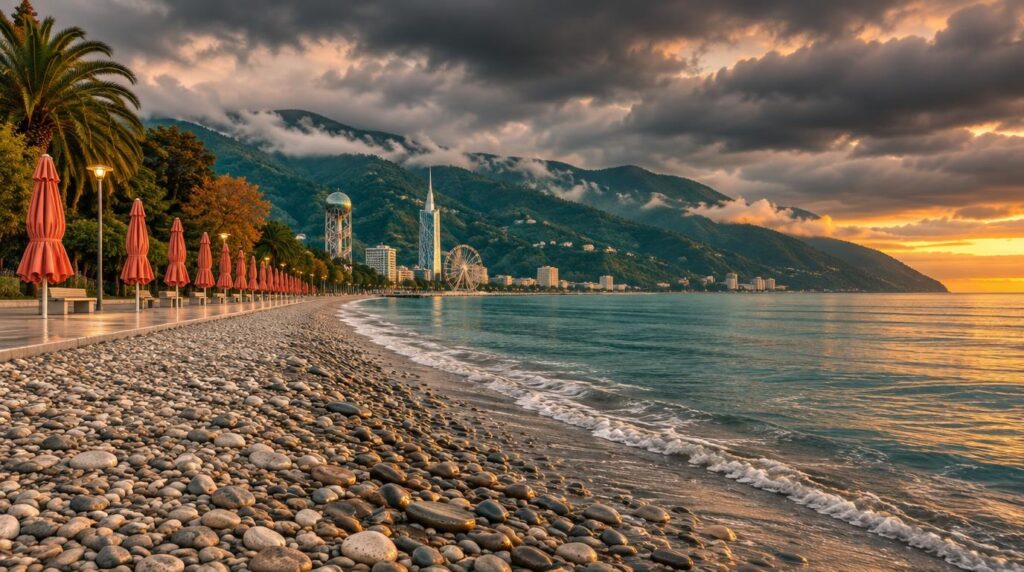
Batumi fits remote workers who want a beach city, a low monthly budget, and a long visa-free stay.
- Time zone: Workers with UK, European, or Middle East hours.
- Visa: Remote workers whose clients are outside Georgia and whose passport qualifies for the 365-day stay.
- Budget: Roughly $900 to $1,300 a month, including a coworking desk, based on the example budgets above.
- Lifestyle: Travelers who want swimming weather from about June to September.
Some readers may do better elsewhere.
- US East Coast clients: Calls would fall in the evening or at night.
- Readers who want a large nomad community: Tbilisi has more coworking options and events.
- Anyone with Georgian clients: The work permit may apply, and sorting it out comes before the move.
- Readers who dislike rain: Batumi receives more than 2,400 mm a year, with November the wettest month.
Readers who want to compare other cities can read our guide to digital nomad cities in the Caucasus.
Batumi offers an inexpensive beach base with a visa-free stay of up to a year and a good fit for European working hours. Monthly costs of about $900 to $1,300 are realistic outside summer, and the coworking scene is small but usable. If Batumi matches your plans, search flights to Batumi on FlyBibe and compare dates, routes, and fares in one place. The current work permit rules and coworking prices are worth confirming before you settle in.