

The Moroccan Sahara is a long drive from Marrakech, so the number of nights you book shapes the whole trip. This guide compares tours with one, two, and three nights in the desert. It covers routes, drive times, prices, camp types, the best season, and how to book a licensed operator. It also looks at signal, power, and time offline for remote workers.
This guide assumes you already have a base in Marrakech. If you are still choosing one, the Marrakech digital nomad guide covers cost of living and coworking.
A note on the numbers. Prices come from listing pages on Expedia, Travelocity, TourRadar, Musement, and Tripcanvas that appeared in search results on October 28, 2026. Dirham amounts use about 9.3 Moroccan dirhams (MAD) per US dollar, based on mid-2026 mid-market rates reported by Wise and ExchangeRate-API. Prices change often, and some listings do not say whether the price covers one person or a whole vehicle.
Which Tour Length Fits Your Trip
Most Sahara tours from Marrakech head to one of three desert areas. Each area needs a different number of nights.
- One night (2 days): Zagora and the Draa Valley, about 350 km from Marrakech.
- Two nights (3 days): Merzouga and the Erg Chebbi dunes, or Erg Chigaga near M’Hamid.
- Three nights (4 days): The same dunes with shorter driving days, or a one-way trip that ends in Fes.
- Shortcut: The Agafay desert, 30 to 40 km from Marrakech, has stone ground and no Sahara dunes.
Drive time is usually the deciding factor. Each extra night makes the daily drive shorter and leaves more time for stops.
How Far the Sahara Is From Marrakech
The distance explains why one-night tours feel rushed and three-night tours feel calmer.
- Zagora: About 350 km by road. Rome2rio estimates about 6 hours of driving each way.
- Merzouga: About 546 km, or roughly 9 hours without stops, according to Rome2rio. Operators quote 8 to 10 hours, and one travel site says more than 10.
- The mountain road: Both routes cross the High Atlas on the N9 over the Tizi n’Tichka pass, at 2,260 m. Local Morocco Tours says there is no motorway option to Merzouga.
- Winter closures: Snow closed the pass to traffic on January 3, 2026, and again on January 20, 2026, according to Hespress. The January 20 closure was expected to lift before midday.
- Fly and drive: Rome2rio lists a flight-and-ground route to Merzouga of about 6 hours, priced at 1,700 to 3,100 MAD (about $185 to $335). Schedules and fares need checking for your dates.
A two-day Zagora tour puts about 12 hours of driving into two days. A three-day Merzouga tour adds up to about 18 hours. Operators spread the drive across the days, and stops make each day longer.
One Night: Zagora and the Draa Valley (2 Days)
The Zagora tour is the shortest trip that includes a night in a Saharan camp.
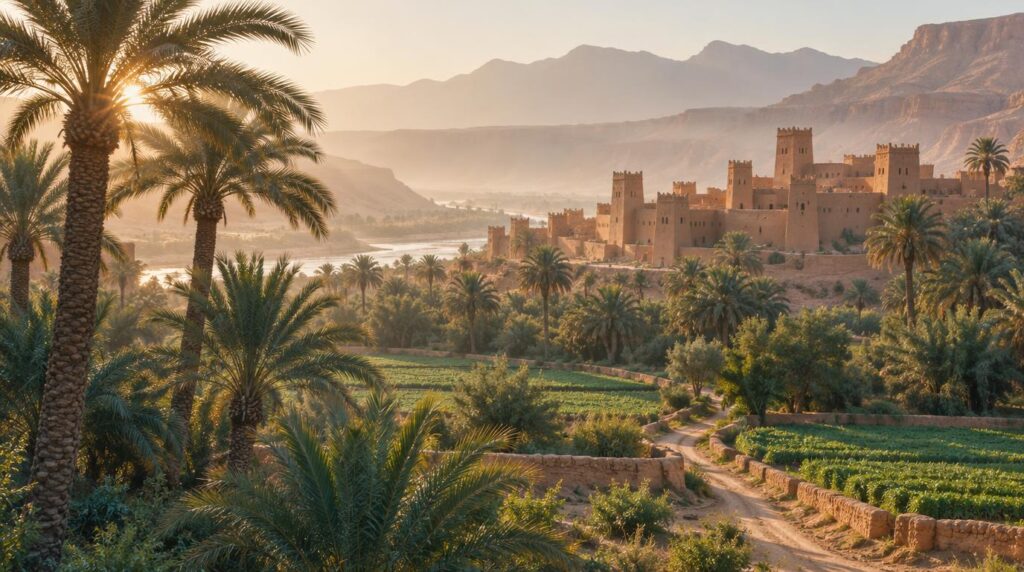
- Route: Marrakech, the Tizi n’Tichka pass, the Ait Benhaddou kasbah, Ouarzazate, the Draa Valley palm groves, and Zagora.
- Timing: Listings commonly show pickup between 7:00 and 8:30 in the morning. One listing gives a drop-off in Marrakech at about 18:00 on day two.
- In the desert: A camel ride of about one hour at sunset, dinner and a night at camp, then sunrise and a camel ride back.
- Dunes: Several sellers describe the Zagora dunes as small, and the surroundings as rockier than Merzouga.
- Price, basic: Listings start at about $83 to $99 per person (750 to 900 MAD).
- Price, private: Private tours on Musement start at $153 to $165 (1,400 to 1,550 MAD). The same site lists a private tour with a Bedouin camp at $346 (3,200 MAD). One Expedia listing prices a lone traveler at $746 (6,950 MAD), which shows how much a private vehicle drives the cost.
The trip suits people with only two free days. Most of those days are spent in the vehicle, and the dunes are smaller than at Merzouga.
A Shorter Option: The Agafay Desert
Agafay is a stone desert about 30 to 40 km southwest of Marrakech, and the drive takes roughly 40 to 60 minutes.
- Landscape: Wikivoyage describes Agafay as a rocky plain, unlike the sandy dune fields near Merzouga and Zagora. Local operators say Agafay is not part of the Sahara.
- Night stays: Camps range from basic tents to luxury camps, and some luxury camps have pools, according to 22places.
- Best use: One evening or one night when time is short.
Agafay offers a desert feel close to the city and has no dunes.
Two Nights: Merzouga and Erg Chebbi (3 Days)
The three-day Merzouga tour is the format that appears most often in listings. One operator on Expedia calls it its most popular tour.
- Day 1: Marrakech, the Tizi n’Tichka pass, Ait Benhaddou, Ouarzazate, and the Valley of the Roses. The night is in a hotel or riad in the Dades Valley.
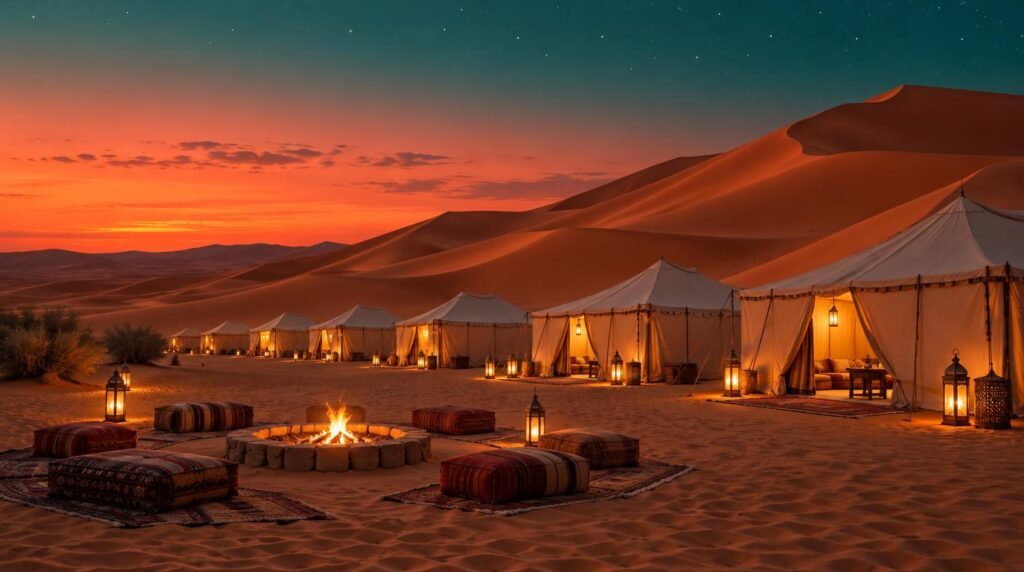
- Day 2: Todra Gorge, Erfoud, and Merzouga. A camel ride of about one hour at sunset leads to camp, dinner, and music.
- Day 3: Sunrise in the dunes, a camel ride back to Merzouga, and the long drive to Marrakech. Arrival is in the early evening.
- Dunes: Erg Chebbi rises up to about 150 m, according to Local Morocco Tours. Some sites give much higher figures.
- Price, shared: Listings show about $110 to $235 per person (1,000 to 2,200 MAD).
- Price, private or upgraded: Listings show about $375 to $455 per person (3,450 to 4,250 MAD). One listing adds about 60 euros for a luxury camp.
- Group size: One shared three-day listing on TourRadar allows 2 to 17 travelers in the group.
The route has two long driving days and one lighter day. The Dades Valley night splits the outbound trip, and the return is a single drive of about 9 hours.
Erg Chigaga Instead of Erg Chebbi
Erg Chigaga sits near M’Hamid, which is about 9.5 hours from Marrakech by bus, according to Malika in Morocco. Tours reach the dunes by 4×4.
- Route: Day one reaches Zagora or M’Hamid, day two crosses the desert by 4×4 to Erg Chigaga, and day three returns to Marrakech.
- Camel time: One TourRadar listing includes a camel trek of about 2 hours from M’Hamid.
- Price: Private three-day listings show about $480 to $515 per person (4,450 to 4,800 MAD).
- Crowds and signal: One travel blog calls Erg Chebbi the standard tourist choice, and says it gets crowded in peak season. Marocmama says camps near Zagora and Chigaga may have no signal at night.
Chigaga costs more and involves more off-road driving. It may suit travelers who want a quieter camp.
Three Nights: Four-Day Routes
A fourth day lets operators split the drive into shorter days. Listings show three common routes.
- Merzouga with a Draa Valley return: Dades Valley, Todra Gorge, and a camp night in Merzouga. The next day goes through Rissani and the Draa Valley palm groves to a night in Ouarzazate. The last day is the drive to Marrakech.
- Erg Chigaga with two camp nights: One travel guide describes a 4-day, 3-night trip. It has two nights at a camp near M’Hamid and one at a riad in the Draa Valley.
- One-way to Fes: Marrakech, Dades Valley, Merzouga, then Fes on day four. The route ends in Fes, so there is no drive back. You carry your luggage for the whole trip.
- Price, Merzouga loop: Shared listings start at about $155 to $180 per person (1,450 to 1,650 MAD). Private listings on TourRadar show about $515 to $605 (4,800 to 5,650 MAD). Platinumlist prices a private tour at 11,000 MAD for one traveler (about $1,180) and 12,000 MAD for two (about $1,290).
- Price, Chigaga: Private four-day listings show about $715 to $755 per person on TourRadar (6,650 to 7,000 MAD). Sun Trails lists luxury-camp rates from 975 euros.
- Price, one-way to Fes: A private listing on Tripcanvas starts near $395 (3,650 MAD). A luxury-camp version on TourRadar starts near $1,060 (9,850 MAD).
On the three-day tour, the way back is one long day. Four-day versions with a Draa Valley night split the return as well, and the one-way route removes it.
What the Price Usually Includes
Packages differ a lot, so the cheapest listing often covers less than the next one.
- Usually included: Transport, a hotel or riad night on longer routes, camp dinner and breakfast, and a camel ride.
- Often extra: Lunches, drinks, and tips. One listing advises carrying 170 to 250 MAD per person per day for extras.
- Camps: Budget camps use shared tents that sleep 2 to 4 people, according to one operator. Standard camps give a private tent and a shared bathroom tent. Luxury camps have private bathrooms with hot water.
- Toilets and showers: Morocco Friendly Travel says standard camps often have squat toilets and cold showers.
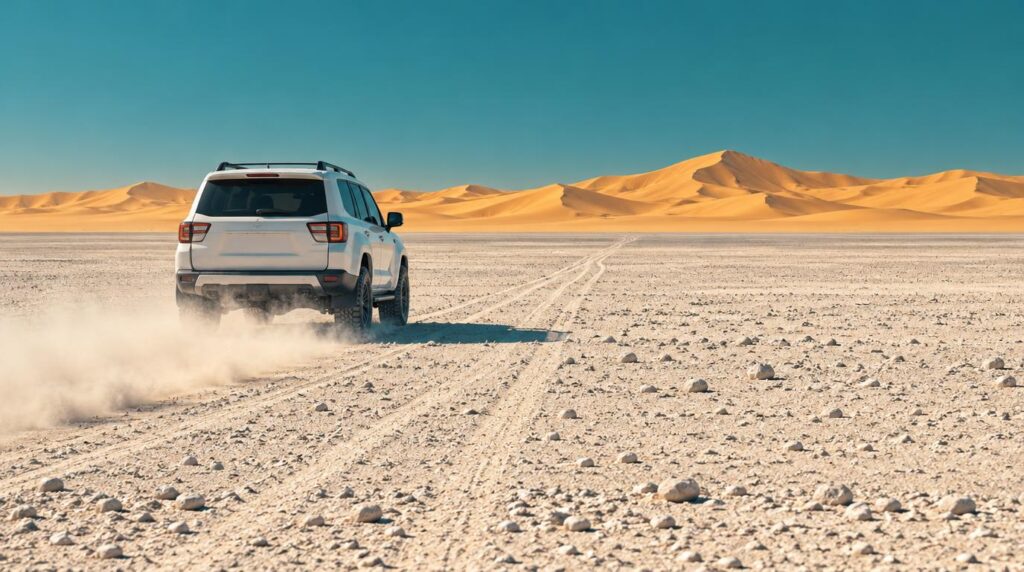
- Vehicle: Shared tours use a minibus, and one listing warns that the vehicle and driver can change each day. Private tours use a minivan or 4×4.
- Camel alternative: Some listings offer a 4×4 ride to camp.
A very low price for three days leaves little room for two nights of lodging, meals, fuel, and a driver. One listing shows under $20 for a three-day trip, so asking for the full price in writing is worthwhile.
Best Season and Weather
Spring and autumn offer the most comfortable days, and winter nights can be cold.
- Best months: March to May and September to November, according to Natural High Safaris and several operator guides.
- Temperatures: BestDateWeather uses 10 years of ERA5 data. It shows Merzouga at 7 to 20 °C (45 to 68 °F) in February and 11 to 24 °C (52 to 75 °F) in March. August runs 27 to 41 °C (81 to 106 °F).
- Winter nights: Moon Travel Guides says temperatures can drop below freezing in some parts of the desert. Local Morocco Tours adds extra wool blankets and a stove in winter.
- Summer: Natural High Safaris says August highs reach about 40 °C (104 °F), and nights rarely fall below about 27 °C (80 °F).
- Flooding: The FCDO warns of flash floods in mountains and near rivers in winter. News reports in October 2024 described heavy rain that formed temporary lakes near Merzouga.
- Ramadan: The next Ramadan starts in February 2027, according to the FCDO. Some restaurants and shops close in the daytime, and one tour guide says schedules can change.
Booking in spring or autumn lowers the weather risk. A winter trip can still work with warm layers and a flexible schedule, in case snow closes the pass.
Signal, Wifi, and Power for Remote Workers
A Sahara night is mostly offline, so the work week needs planning around it.
- Phone signal: Sources disagree. Marocmama says coverage is limited to towns and main roads, and fades at desert camps. An eSIM seller says 4G is stable in Merzouga town and falls quickly once you enter the dunes.
- Wifi: Marocmama reports slow satellite wifi at luxury camps in Merzouga and no connection at Zagora and Chigaga camps. Some camp listings advertise free wifi with high speeds, but those figures come from the properties themselves. A FlyBibe guide explains how to find reliable wifi speed before booking a stay.
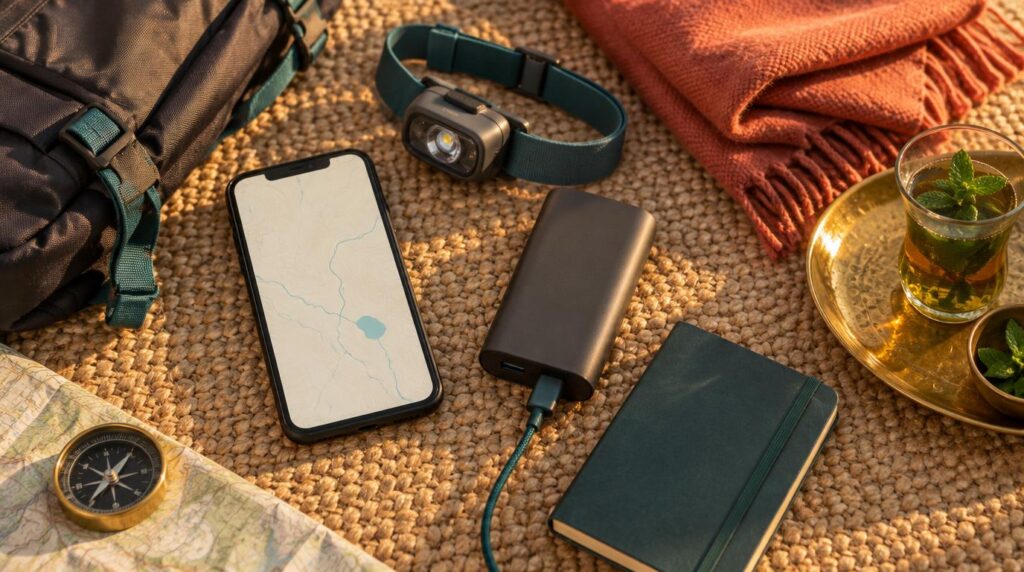
- Power: Morocco Friendly Travel says camps have limited electricity, and suggests a power bank and a headlamp.
- Network choice: Two sources say Maroc Telecom has the best coverage in remote areas. FlyBibe’s eSIM versus local SIM comparison covers the options.
The long driving days leave little room for client calls. Many remote workers may prefer to book a Sahara tour around a weekend or a planned offline break. Telling clients in advance and downloading maps and files before leaving Marrakech can make the offline stretch easier.
Rules, Safety, and Entry
- Entry for UK passports: The FCDO says visa-free for up to 90 days for tourism. The passport must be valid for at least 3 months after arrival. Other passports have different rules, so check with a Moroccan consulate before booking.
- Government advisories: The US State Department rates Morocco at Level 2, exercise increased caution, because of terrorism. The advisory is dated September 4, 2026. The FCDO says terrorists are likely to try attacks, including in places visited by foreign nationals.
- Guides and touts: The FCDO says people posing as official guides often harass tourists. It advises guides in medina districts to carry an official badge and local permission. One travel-agency guide says some medina intermediaries sell cheap desert trips with no link to the company that runs the tour.
- Roads: The FCDO says road accidents are frequent, night driving is dangerous because of poor lighting, and mountain roads can be hazardous in bad weather.
- The border: Merzouga is about 50 km from the Algerian border. The land border is closed and patrolled, and crossing without authorisation is illegal, according to the FCDO.
- Quad bikes: Some Merzouga tours add quad rides. The FCDO says safety standards vary and some insurance policies exclude quad biking.
- Drones: Flying a drone needs permission from Morocco’s civil aviation directorate, and unapproved flights risk fines and confiscation, according to the FCDO.
- Camels: SPANA, a charity for working animals, advises choosing animals that look fit, healthy, and in good condition. PETA opposes camel rides in Morocco. Some travelers choose the 4×4 option instead.
None of these points rule out a trip. They explain why a licensed operator, a plan that avoids night driving, and travel insurance that covers activities all matter.
How to Book Safely
Listings on Expedia, Travelocity, and TourRadar name a local Moroccan operator for each tour. The site that sells the tour is often a middleman. Ask these questions before paying.
- Operator: Name, address, and Ministry of Tourism licence number. Morocco requires Ministry approval to open a travel agency, according to eTurboNews.
- Vehicle and group: Whether the vehicle is shared or private, how many people travel together, and whether the driver stays the same each day.
- Camp: Tent type, bathroom type, bedding, and heating in winter.
- Inclusions: Meals, the first-night hotel, entry fees, drinks, and tips.
- Refunds: One listing from Open Travel – Day Tours refunds in full if you cancel at least 24 hours before the start. A listing from Adrar Tours says all sales are final with a 100% penalty.
- Payment: Some camp listings say the property accepts cash only, so carrying dirhams is wise.
Several listings show instant confirmation, and the seller can say how far ahead to book for your dates. To compare current options by length, search Sahara tours from Marrakech on FlyBibe.
Which Option Suits You
- One night in Zagora: For people with two free days who accept about 6 hours of driving each way and smaller dunes.
- Two nights in Merzouga: For readers who want taller dunes and accept about 18 hours of driving across three days.
- Erg Chigaga: For readers who want a remote camp and accept more off-road driving and a possibly offline night.
- Three nights: For readers who want shorter driving days, the Draa Valley, or an exit toward Fes.
- Agafay: For one evening or one night close to Marrakech.
People who feel sick on winding roads may want a shorter route, since the Tizi n’Tichka stretch has about 20 km of bends. People who must stay online all day may prefer to keep the camp night for a day off.
The right Sahara tour depends on how many days you can spend away from the desk and how long you can sit in a vehicle. One night suits a tight schedule, two nights give the tall dunes, and three nights spread the drive. When your dates are set, find desert tours from Marrakech on FlyBibe to compare options and book the trip.