

Elephant tours around Chiang Mai range from hands-off forest walks to programs that include feeding and bathing. This guide explains how to tell them apart and what the main operators charge in baht and dollars. The guide also covers how to book without landing on a fake site. Prices come from each operator’s own website, checked on November 3, 2026, and are converted at about 33.5 baht per US dollar.
How to Tell an Ethical Sanctuary From a Marketing Label
A venue can call itself a sanctuary, rescue center or retirement home without being high welfare, according to World Animal Protection (WAP), an animal welfare charity. WAP’s 2026 Bred to Entertain report covered 236 venues in Thailand holding 2,849 elephants, visited between February 2024 and January 2025. The standards below come from that work.
- No riding or shows: WAP found that 43% of elephants in Thai tourism were still used for rides in 2024. The figure was 92% in 2010. Venues holding 21% of the elephants still offered shows.
- Look, not touch: WAP says a venue that lets visitors ride, bathe or touch elephants has trained them with cruel methods.
- No baby elephants on show: WAP says a baby elephant on display, especially without its mother, means the venue is not elephant friendly. Good venues should not breed.
- Freedom to move: elephants should be able to roam, graze and socialize instead of standing on short chains.
Dr Jan Schmidt-Burbach, who led the report, said captivity is not an adequate situation for elephants, even at elephant-friendly venues. A visit is therefore a choice between options that cause more or less harm, and the lists below help with that choice.
Lists Worth Checking
- Elephant Welfare Alliance (EWA): a directory that works alongside WAP. In November 2026 it listed 12 venues across Thailand and Cambodia, including BEES, ChangChill Hillside, ChangChill View Doi and Kindred Spirit Elephant Sanctuary.
- WAP’s elephant friendly guide: reviewed in December 2025. The guide separates venues that follow its guidelines from those that still offer hand-feeding over a barrier.
- Responsible Travel: a UK travel company with a public list of sanctuaries it does and does not support. The company says it no longer promotes holidays that offer bathing.
- ACES: the Asian Captive Elephant Standards is a voluntary certification with Bronze, Silver, Gold and Conservation levels and more than 190 criteria. WAP describes welfare certification schemes in Thailand as voluntary and ineffective, so a badge alone may not settle the question.
A venue named on several independent lists is a stronger sign than one that only has its own marketing. The lists also disagree in places, so the sections below say who lists whom.
Elephant Sanctuary Tour Types Near Chiang Mai
Most visits fall into four types. Each type sets different rules on touching and feeding, so the type often says more than the sanctuary’s name.
Hands-Off Day Walks at ChangChill and BEES
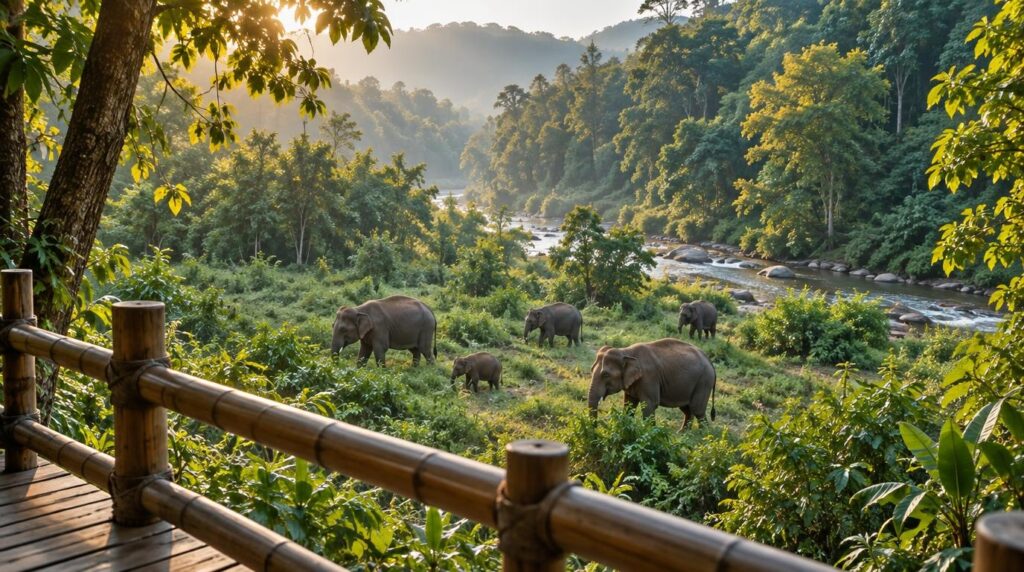
ChangChill and BEES are small operations where visitors watch elephants from a distance and do not touch them. Both are in the EWA directory, and Responsible Travel supports both.
- ChangChill (View Doi site) price: the full day costs 2,500 THB (about $75), or 1,800 THB ($54) for children under 10. The half-day morning visit costs 1,900 THB ($57), or 1,500 THB ($45) for children. The Hillside site has its own trip pages.
- ChangChill schedule: hotel pickup is between 7:30 and 8:00 AM, with about 1.5 hours of driving. The full day returns at 4:30 to 5:00 PM and the half day at 3:00 to 3:30 PM.
- ChangChill activities: visitors walk into the forest to watch four resident elephants, meet the mahouts and fill feeding tubes with corn, sugar cane and grass. A Thai vegetarian lunch is included, and the full day adds a herb lesson and an elephant cooking class.
- BEES price: the Observation Walk costs 2,500 THB ($75) for adults and 1,800 THB ($54) for ages 10 to 17. The walk runs on Tuesdays, Wednesdays and Fridays, subject to availability.
- BEES schedule: the group meets at 8:00 AM, has a safety talk and breakfast, and walks at 9:00 AM. A picnic lunch is included, and the day ends around 4:00 to 4:30 PM. The sanctuary is in Mae Chaem, about 2.5 hours from the city.
- BEES rules: a strict no-touch policy applies. BEES needs at least two participants, accepts no drop-ins or half-day visits, and does not take children under 10.
The two walks cost the same for adults, so the choice comes down to travel time and children. ChangChill is about an hour closer and sets a child price for under-10s, while BEES requires age 10 or older.
Overnight and Village Stays at BEES and Kindred Spirit
Overnight programs add lodging and meals and allow longer forest hikes. They cost more, and they place visitors in rural villages with limited power and signal.
- BEES, 2 days and 1 night: programs start from 6,000 THB (about $179). The price includes transfers, onsite accommodation, lunch and dinner on day one, and breakfast and lunch on day two. Day two is a full-day hike. Pickup is inside the Old City moat on Mondays, Thursdays and some Saturdays.
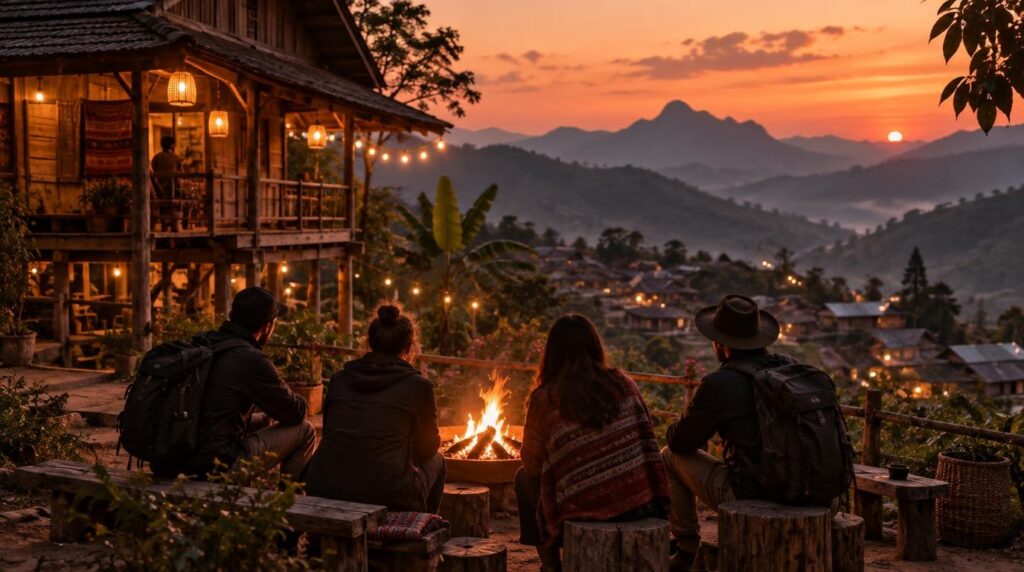
- Kindred Spirit, 2 days: 5,300 THB (about $158) each for two or more people, or 10,000 THB ($298) for one traveler. Transport, accommodation and meals are included, with pickup in Chiang Mai at 9:00 AM. Guests stay with a Karen family in Mae Chaem District and hike to watch the herd.
- Longer stays: Kindred Spirit offers a 3-day program at 7,500 THB ($224) each for two or more. Its 5-day program costs 15,000 THB ($447). BEES offers 4-day and 7-day programs.
A solo traveler pays almost double at Kindred Spirit. Asking whether a group is already booked could save about 4,700 THB (about $140).
The Large Rescue Park at Elephant Nature Park
Elephant Nature Park (ENP) is one of the best-known sanctuaries in the area. The park sits about 65 km from the city center, and vans take around 90 minutes. Saengduean “Lek” Chailert founded it, and ENP describes itself as the first ethical elephant sanctuary of its kind in Asia.
- Half-day visits: 2,500 THB (about $75) for the morning or afternoon program.
- Full day (SkyWalk): 3,500 THB ($104), including time at a “Hands Off” project.
- Overnight: 5,800 THB ($173), with dinner and a night in a park hut.
- Children: children under 12 usually pay about half. ENP’s terms and its program pages differ slightly on the age bands, so confirm the rate when booking.
- Bathing: ENP does not allow visitors to bathe with elephants. Since April 2018 the herd bathes alone, and visitors watch from a platform over the Taeng river.
WAP lists ENP as a high-welfare venue that offers hand-feeding over a barrier. The same WAP page states that, due to a legal investigation, ENP is temporarily removed from its elephant-friendly list. The page does not say what the investigation concerns. Responsible Travel calls ENP a pioneer and says it does not promote riding or performances.
Two pages on ENP’s own website disagree. The FAQ says day visits run the full day, while the programs page lists half-day visits. Confirming the program before paying avoids surprises. The park shop takes cash only and there is no ATM, so guests need baht in cash for the balance.

Feeding and Bathing Programs at Elephant Jungle Sanctuary
Elephant Jungle Sanctuary (EJS) runs several sites. Its Chiang Mai site has the lowest prices in this guide, and most of its programs include feeding or bathing.
- Feed, Craft & Chill: 690 THB (about $21) for one hour.
- Feed and Shower: 1,390 THB ($41) for 1.5 hours.
- Half Day: 1,900 THB ($57) for 6 hours, with bathing and a mud spa.
- Watch Me: 1,900 THB ($57) for 6 hours, with observation from a distance.
- One Day Elephant Care: 2,800 THB ($84) for 9 hours.
- Overnight: 5,900 THB ($176) for 2 days.
- Pickup: free hotel transfer within 5 km of the Old City, with a small surcharge beyond that.
EJS states that its experience is ACES Gold certified. EJS is not on the WAP or EWA lists reviewed for this guide. Responsible Travel does not support it. The group cites indications that the Chiang Mai site may breed elephants for tourism, and it asks visitors to share what they see.
Views differ on supervised feeding and bathing. EJS and ACES allow them, while WAP and Responsible Travel advise against bathing. The Watch Me program offers observation only, at the same price as the half day.
What Moves the Price
At the main operators above, day visits cost about 1,900 to 3,500 THB ($57 to $104). Overnight stays cost about 5,300 to 6,000 THB ($158 to $179). Short feeding programs at EJS start lower. All prices are published rates from early November 2026 and can change.
- Group size: Kindred Spirit charges 5,300 THB per person for two or more and 10,000 THB for one. BEES needs at least two participants to run a program.
- Length and inclusions: overnight prices include lodging and meals, and day prices usually include a hotel transfer and lunch.
- Children: ENP and ChangChill set lower child prices, and some ENP projects do not accept children.
- Private tours: ENP says guests who cannot spend a full day can ask about a private tour, with the price quoted on request.
- Pickup location: a hotel outside the pickup zone may add a surcharge. BEES asks guests outside the Old City moat to meet its van at Wat Chai Siphum.
Rules, Age Limits and What to Bring
- Minimum age: BEES requires age 10 or older. Some ENP projects, such as Elephant Highlands, do not accept children.
- Clothing: BEES recommends long pants and sleeves, enclosed shoes that can get wet, and clothing that covers knees and shoulders. BEES keeps spare rain boots but cannot promise a fit. A torch helps during power cuts.
- Drones: ENP bans drones at its park and projects, noting that they scare the elephants.
- Distance: BEES says an adult Asian elephant weighs about 3,000 kg on average. WAP notes that tourists and mahouts are injured each year, even at better venues, so staff directions apply throughout each tour.
- Insurance: ENP covers visitors for accidents up to 200,000 THB (about $5,965) and recommends individual medical cover. Nomads who already hold travel insurance can check whether it covers animal-contact activities.

Best Time of Year for an Elephant Tour
- Cool season, about November 17 to January 24: highs stay below 86°F (30°C), according to WeatherSpark’s climate summary for Chiang Mai. The drier part of the year runs from October 19 to April 25.
- Smoke season, about February to April: reports from IQAir and local news describe crop-burning smoke in northern Thailand. March is often the worst month, and forest walks may be less pleasant on smoky days.
- Hot season, March 12 to May 7: April highs average 97°F (36°C).
- Rainy season: September is the wettest month, at about 7.1 inches (180 mm). Trails turn muddy, which is why BEES suggests rain boots.
November to January is usually the most comfortable window, and the smoke months are worth avoiding for a forest hike where possible.
How to Book, Cancel and Avoid Fake Sites
Booking rules differ between operators, so the terms are worth reading before paying a deposit.
- BEES: the day walk needs a booking two to three days ahead. For bookings made months ahead, a 20% non-refundable deposit applies and the balance is due one month before. All payments are non-refundable, with a rebooking window of 365 days, subject to availability.
- ENP: deposits are non-refundable. A date change costs 980 THB per booking and is not possible within 4 days of a day or overnight visit. Canceling within 4 days means the full balance is due, paid in baht on the day.
- EJS: bookings close at least 12 hours before pickup, or 2 hours for the shortest feeding program.
- ChangChill: bookings run through a FareHarbor page linked from its official site. The cancellation terms are worth checking on that page before paying.
BEES, ENP and EJS all advise staying in Chiang Mai the night before, because the vans cannot wait for late arrivals. BEES says the program fee is forfeited if a delayed flight, bus or train makes a guest more than 20 minutes late.

Checking That an Operator Is Real
Thailand’s Department of Tourism (DoT) says tour businesses must hold a valid license and urges travelers to check before buying. The DoT website, www.dot.go.th, has a License Check box on its home page where a name or license number can be searched. The Phuket News reported the feature in July 2025, and a business that does not appear there may be operating without authorization.
- Official websites: several camps use similar names, so the web address should match the one in the EWA or WAP directory.
- Questions to ask: a seller who cannot name the sanctuary, or who offers rides, is a sign to look elsewhere. Asking whether the elephants are chained or bred is reasonable.
- Payment: a deposit paid through the operator’s own booking page can be easier to trace than a transfer to a personal account.
Travelers who want to compare other day trips can search remote-friendly tours in Chiang Mai on FlyBibe.
Fitting an Elephant Tour Around a Work Week
- Day trips: most leave around 7:30 to 8:00 AM and return between about 3:00 and 5:30 PM. A tour therefore uses one working day. The BEES walk runs on Tuesdays, Wednesdays and Fridays.
- Overnight stays: ENP says wifi in common areas can be intermittent or slow, and mobile service is limited. BEES reports intermittent internet and frequent power outages.
Setting up an eSIM or local SIM helps in the city, while signal at the sanctuaries can vary. A tour day with no calls scheduled, and an easy evening afterward, suits a full day on foot in warm weather.
Which Elephant Tour Fits Which Traveler
- Strictly hands-off, one day: the ChangChill or BEES walk, both in the EWA directory.
- Larger herd and rescue stories: ENP, with the WAP status note above in mind.
- Lower price with feeding or bathing: EJS, or its Watch Me program for observation only.
- Village immersion: Kindred Spirit or a BEES overnight stay.
- Families: ENP and ChangChill set child prices, while BEES takes ages 10 and up.
None of the operators listed here offers riding. Travelers who want to touch elephants or take close photos may find the hands-off tours restrictive, and WAP advises against close contact.
Conclusion
Ethical elephant tours around Chiang Mai are easier to choose when the type of visit comes first and the sanctuary second. A hands-off day walk costs about 1,900 to 2,500 baht, and an overnight stay costs about 5,300 to 6,000 baht. After narrowing the list, find more Chiang Mai experiences on FlyBibe and plan the rest of the week around the trip.