
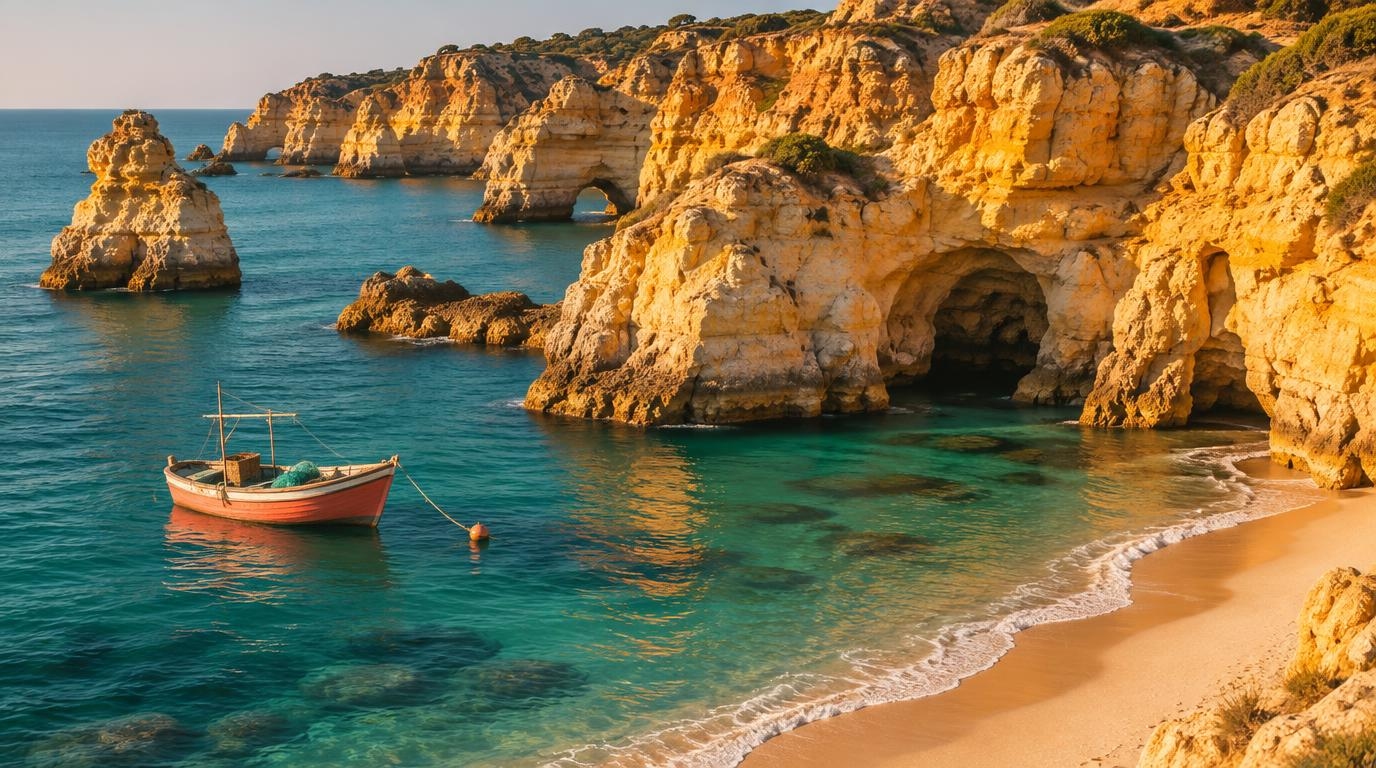
The Algarve is Portugal’s southern coast, with mild winters and a beach close to most towns. This guide compares three bases for remote work: Lagos in the west, Faro in the middle, and Tavira in the east. The guide covers internet, monthly costs, visas, time zones, coworking, transport, safety, and weather for each one. All figures were checked on November 20, 2026, and the sources are named in the text.
The Three Towns at a Glance
The towns sit on one rail line, so living in one makes the other two easy to reach. Population figures are for the whole municipality, from the 2021 Census.
- Lagos: 33,494 residents. Lagos is the western end of the Algarve rail line and has more coworking options than Faro or Tavira. Outsite calls it one of the most popular spots for digital nomads in the Algarve.
- Faro: 67,622 residents. Faro is the capital of the Algarve and has the region’s international airport, according to workin.space.
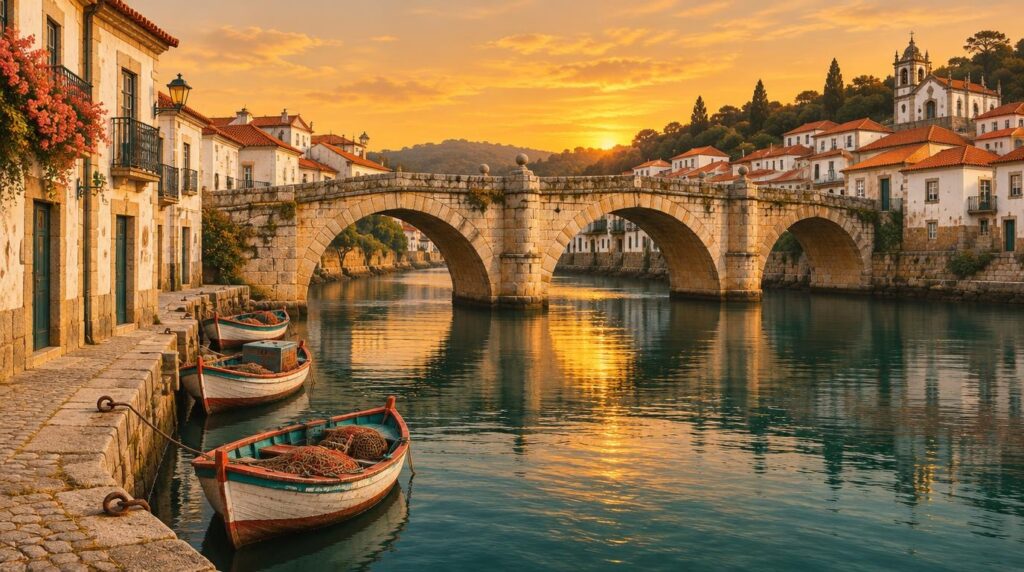
- Tavira: 27,523 residents. Tavira sits on the Gilão river and is known for its Roman bridges and historic churches. Stamped Nomad describes a low-drama daily routine there.
Internet and Mobile Data
Portugal’s national speeds are strong, but verified speed tests for Lagos, Faro, and Tavira on their own were not available. The national figures below are the best sourced numbers.
- Fixed broadband: Ookla’s May 2026 data, reported by ISPreview, shows a national median of 251.79 Mbps download and 115.98 Mbps upload. Latency was 6 ms, and Portugal ranked 21st worldwide.
- Mobile: worlddata.info, which cites the same Ookla index, lists a median mobile download speed of 144.40 Mbps.
- Other measures: Methods differ, and so do the results. ANACOM, the Portuguese communications regulator, found a median of 108 Mbps on fixed home connections in its 2022 tests. Browser tests by speedof.me in 2026 show 110.1 Mbps.
Speeds at this level should handle video calls and large uploads in most buildings. The result still depends on the provider and the building. Before signing a lease, a message to the landlord about the provider and plan speed is worth sending. A coworking desk in any of the three towns can serve as a backup connection.
Cost of Living
Numbeo estimates, shown on Expatica with a data date of 1 June 2026, give a rough monthly budget for one person. The totals below add living costs excluding rent to the rent of a one-bedroom apartment in the town centre.
- Lagos: €772 excluding rent plus €1,093 for rent, about €1,865 in total.
- Faro: €716 plus €949 for rent, about €1,665. A one-bedroom outside the centre costs €827, which brings the total to about €1,543.
- Tavira: €750 plus €1,101 for rent, about €1,851. Outside the centre the rent is €888, for a total of about €1,638.
- Lisbon, for comparison: €800 plus €1,386 for rent, about €2,186.
On these estimates, Lagos and Tavira cost about 15% less than Lisbon, and Faro costs about 24% less. Lagos and Tavira are close to each other, and Faro is the cheaper of the three. The Lisbon digital nomad guide has the full city breakdown.
Rents also change with the season. According to Residaro, long-term renters compete with holiday lets from June to September, so a winter search may meet less competition. Investropa adds that Faro’s university, hospital, and airport support steady rental demand all year. Numbeo figures are estimates, and landlords may quote different prices.

Visa and Entry
Visa rules depend on the passport and the length of stay, and they are the same in all three towns. The details below were checked on November 20, 2026.
- Stays up to 90 days: Visitors from many countries can enter the Schengen Area without a visa for 90 days in any 180-day period. The Schengen 90/180 rule counts days spent in all Schengen countries together.
- Border records: The EU’s Entry/Exit System has been fully operational since 10 April 2026. According to Euronews, it records entries and exits digitally for most non-EU travellers.
- ETIAS: The EU had planned this travel authorisation for the last quarter of 2026. Which? and Gulf News report that the EU removed that window and has not set a new start date. Some official pages still show the older wording, so sources currently disagree. The EU’s Travel to Europe website is a good place to check before booking.
- D8 remote-work visa: For longer stays, Portugal’s D8 requires income of at least four times the national minimum wage. With the 2026 minimum wage at €920, the threshold is €3,680 a month, according to Expatica. The work must be for clients or employers outside Portugal. The Portugal D8 visa post covers the steps.
- Two D8 tracks: The temporary-stay visa runs for up to one year. The residence visa is valid for four months, and the holder then applies to AIMA for a two-year residence permit, according to Immigrant Invest. Feather lists the national visa fee at €110.
- Paperwork: VFS Global’s checklist shows that consulates ask for travel insurance, and the post on health insurance plans for digital nomads compares options. Portugalist puts the savings requirement at €11,040 per adult, which equals twelve months of minimum wage.
Expatica notes that Portugal has no special tax regime for D8 holders, so tax residents pay Portuguese tax on worldwide income. The regime that replaced NHR, called IFICI, has its own eligibility rules. The information in this section is general. The Portuguese government’s national visa site is the official source, and a qualified adviser can give legal or tax advice for a personal situation.
The visa route is the same wherever a remote worker settles, so the choice among the three towns rests on cost, coworking, and transport.
Time Zone Fit
Mainland Portugal uses Western European Time, which is UTC+0 in winter and UTC+1 in summer. The overlap figures below assume a 9:00 to 17:00 day in both places.
- UK: The clocks match all year.
- Central Europe: Portugal is one hour behind, so the overlap is seven hours.
- US Eastern: Portugal is five hours ahead. A 9:00 Eastern start is 14:00 in Portugal, which leaves three hours of overlap from 14:00 to 17:00.
- US Pacific: Portugal is eight hours ahead. A 9:00 Pacific start is 17:00 in Portugal, so a standard day has no overlap and calls fall in the evening.
- Clock changes: The US and the EU change their clocks on different dates. The difference with US Eastern drops to four hours for about three to four weeks a year. The change falls in March and from late October to early November, and in 2026 it lasted 28 days.
Portugal works well for UK and European clients. Afternoon calls make East Coast clients manageable, while West Coast hours push meetings into the evening. The post on the best time zones for digital nomads compares bases by client region.
Coworking and Community
Lagos has the most options, Faro has business-style centres, and Tavira has no full coworking scene. Prices below come from listing sites, exclude VAT where the site says so, and can change.
Lagos
- CoLagos: This is the municipal coworking network of Lagos. The central space on Rua dos Combatentes da Grande Guerra lists 24/7 access, high-speed wifi, meeting rooms, and a community kitchen on OneCoworking. The smaller Barão de São João hub has ten workstations, according to The Portugal News, and CoworkingCafe lists a day pass from €10.
- Lagos Coworkers: The space on Rua Gil Eanes lists hot desks from €18 a day or €210 a month, excluding charges, on workin.space.
- Community: Outsite lists Lagos Digital Nomads as a coworking space with a strong remote-worker community. Anchorless describes the Algarve Digital Nomads Facebook group as active, with beach meetups and coworking days.
Faro
- Alandra Square: The space on Rua Mouzinho de Albuquerque lists hot desks at €15 a day or €100 a month, excluding tax, on workin.space.
- Faro Avenida Business Center: The centre on Avenida 5 de Outubro lists hot desks at €15 a day or €185 a month, excluding charges.
Tavira
- Scene: Stamped Nomad says Tavira does not have a full coworking scene. Most nomads there work from cafes, hostels, or a rented flat.
- Municipal space: A government network of municipal coworking spaces in the interior of Portugal lists Tavira, and users contact the town council directly. The April 2023 leaflet from CCDR Algarve, the regional coordination commission, marked the Tavira space as still being completed. Its current status needs confirming with the council.
Lagos suits a remote worker who wants a desk and a community, and Faro suits one who prefers a business-style centre. A short stay may suit pay-as-you-go desks, which the post on coworking spaces offering day passes covers.
Getting Around the Algarve
Faro has the region’s international airport, and trains and buses link it to the other two towns.
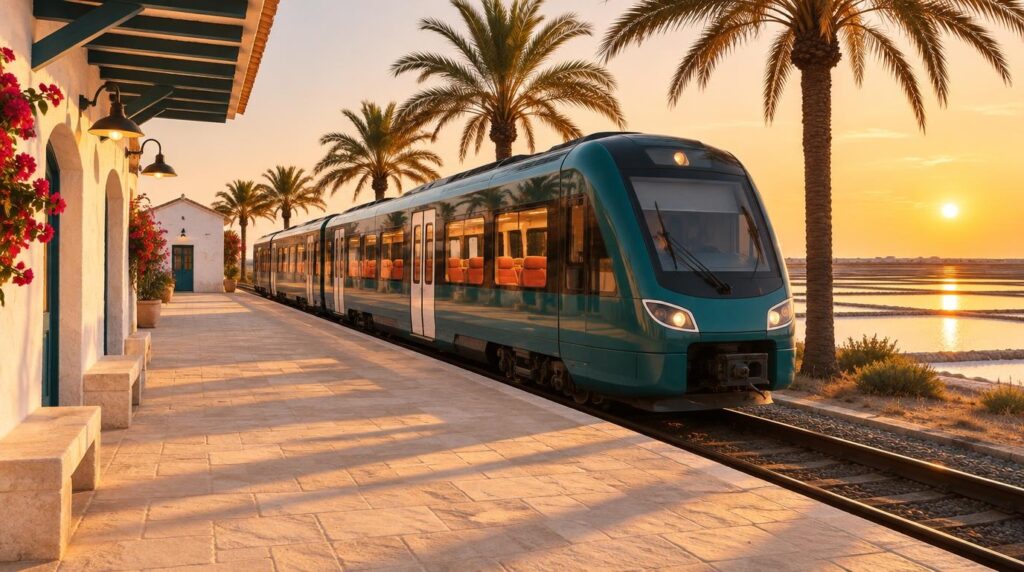
- Train: The Algarve line is about 141 kilometres long, according to CP. Electric trains began running on July 19, 2026. CP says direct trains between Vila Real de Santo António and Lagos no longer need a change at Faro. Outsite gives about 1 hour 45 minutes from Lagos to Faro and about 40 minutes from Faro to Tavira.
- Lagos to Tavira: Algarve-South-Portugal.com puts the train journey at 2 hours 24 minutes to 3 hours 5 minutes, depending on the service.
- Bus: FlixBus runs four rides a day between Faro Airport and Lagos, with the first at 08:35 and the last at 20:20. Fares start at about US$7.
- Lisbon: According to algarve-tourist.com, Lagos to Lisbon takes 3 hours 52 minutes by train and 3 hours 45 minutes by bus. Tavira to Lisbon takes 4 hours 2 minutes by train and 4 hours 15 minutes by bus.
A base in Faro reaches both Lagos and Tavira in under two hours. A base at either end makes the far town a long day trip.
Safety
Portugal ranked 7th in the 2026 Global Peace Index, a position it has held since 2023, according to Portugal Global. The index covers 163 countries and territories.
- Street crime: The UK Foreign Office updated its advice on 12 November 2026. The advice names street crime as a risk on public transport and at crowded stops, and thieves often work in teams.
- Sea and cliffs: The same advice names rip tides as a major hazard and asks swimmers to follow the beach flag system. The advice also highlights falling rocks from cliff erosion in the Algarve, and authorities can fine people who ignore warning signs.
- Wildfires: The risk is higher from April to October, when it is hot and dry.
- Emergencies: The number is 112.
The main risks are street crime and sea conditions. Serious attacks are rare, but the Foreign Office notes that they do occur, with the highest risk late at night near nightlife areas.
Best Time to Go
IPMA, the Portuguese weather institute, publishes 1991 to 2020 climate normals for its Faro station. Lagos and Tavira have their own conditions, and the figures below should be read as a guide for the whole coast.
- Summer: July and August average highs of 29.4°C and 29.2°C, with almost no rain. July averages 0.9 mm and August 3.0 mm.
- Winter: January averages a high of 16.3°C and a low of 8.3°C. December is the wettest month at 90.0 mm, and the yearly total is 455.1 mm.
- Shoulder months: May averages a high of 23.5°C and June 26.8°C. September averages 26.4°C and October 23.3°C.
Shoulder months bring warm weather and, based on the seasonal pattern Residaro describes, may bring less competition for rentals. Summer brings the highest temperatures and the busiest holiday-let market. Readers comparing weather across bases can use the post on cities with a year-round mild climate.
Which Town Fits Which Remote Worker
- Lagos: This town fits a remote worker who wants coworking options, a nomad community, and a coastal base. The Numbeo estimate is about €1,865 a month.
- Faro: This city fits someone who wants an airport, year-round city life, and the lowest estimated costs of the three. Coworking comes mostly as business-style centres.
- Tavira: This town fits solo workers and couples who prefer a quiet routine and good rail links, as Stamped Nomad describes. Work happens mostly from cafes and a rented flat.
- Who may look elsewhere: Workers on US Pacific hours face evening calls from any of the three. Those who want a larger nomad scene may prefer Lisbon. Those who want surf towns closer to the capital can look at Ericeira and Cascais.
Plan the Move
Lagos suits remote workers who want a coworking community, and Faro suits those who want a working city with an airport. Tavira suits those who want a quiet base. If one of them fits your next stretch of work, search flights to Faro on FlyBibe and compare routes and dates in one place. We filter results by wifi, visa rules, and cost as well as price, so the trip fits the way you work.