
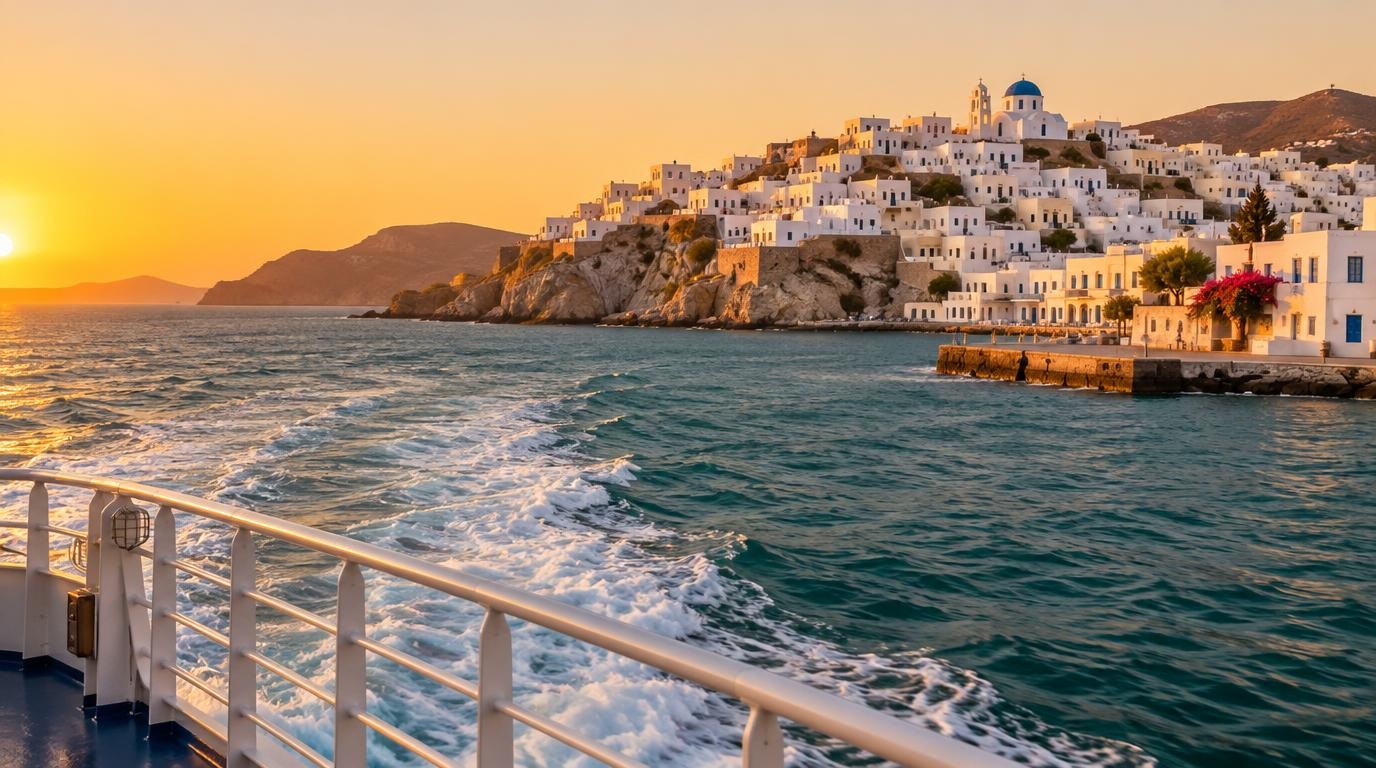
Santorini, Naxos, Paros and Crete all work for remote workers, in different ways. This guide compares their internet speeds, monthly costs, visa rules, time zone fit, coworking options, safety and ferry links. Figures come from named sources and were checked on 29 October 2026. Where sources disagree, the guide says so.
Which Greek Islands Does This Guide Cover?
The guide starts with Santorini and then moves to Naxos, Paros and Crete. Naxos and Paros belong to the same Cyclades island group as Santorini. Crete is far larger. A seasonal travel summary from Pixidia says its main cities, including Chania and Heraklion, stay lively all year.
All four islands share one country, one time zone and one set of entry rules. The differences show up in internet quality, price, coworking and how easy each island is to reach.
How Fast Is the Internet on Santorini, Naxos, Paros and Crete?
Ookla data for May 2026, as reported by worlddata.info, shows Greece averaging about 94 Mbps download and 16 Mbps upload on fixed lines. DataReportal’s Digital 2026 report puts median mobile speed at about 120.5 Mbps. Island figures come from smaller sources and vary more.
- Santorini: Nomad List shows about 14 Mbps, based on user reports. A cliffside villa or hotel may sit well below the national average.
- Naxos: No published speed test for Naxos turned up in this research. Asking the host for a recent test result is a reasonable step.
- Paros: Greek Trip Planner gives a range of 40 to 70 Mbps.
- Crete: Greek Trip Planner gives 80 to 200 Mbps for Heraklion. No figure for Chania was found.
Greek Trip Planner and Nomad List are not Ookla island tests, so these numbers are rough guides. Crete’s cities look like the more dependable choice for video calls and large uploads. Checking wifi speed before booking matters most on Santorini and Naxos. An eSIM or local SIM can serve as a backup, since national mobile speeds are strong.
What Does a Month Cost on Each Island?
Monthly budgets differ sharply, and each source defines a budget in its own way. The figures below were taken from the sites as published on 29 October 2026.
- Santorini: According to Nomad List, a nomad’s monthly cost is about $3,773 to $5,847. Nomada lists a mid-tier budget of $2,790. Car hire falls to around €12 a day from November to March. In September it costs €31, according to Santorini Dave as reported by Pixidia.
- Naxos: Nomada lists a mid-tier budget of $1,725.
- Paros: Innovation Nation estimates €1,000 to €1,500 per month for Paros and Chania.
- Crete: Nomada lists $1,480 for Chania. Affordwhere puts a one-bedroom in Chania at €505 to €886, plus about €665 for groceries, transport and utilities. Together, these come to roughly €1,170 to €1,551.
Within the Nomada figures, Santorini costs nearly twice as much as Chania ($2,790 against $1,480). Naxos sits in the middle at $1,725. Paros and Chania share one range in the Innovation Nation estimate, so they look close in price.
Santorini suits a nomad with a larger budget and a short stay. Naxos, Paros and Chania suit people planning several months on a tighter budget.
Which Visa or Entry Rule Applies on the Greek Islands?
All four islands follow national rules, so the visa answer is the same on all of them.
- EU citizens: They can live and work in Greece without a visa.
- Short stays: US and UK citizens can enter without a visa for up to 90 days in any 180-day period. The Schengen 90/180 rule counts days across the whole Schengen area, so days in other countries also count.
- Entry systems: The EU Entry/Exit System has been live since 10 April 2026. ETIAS has no firm start date. Reports have pointed to the last quarter of 2026, and at least one recent report says 2027. No applications are open.
- Digital nomad visa: The Greece digital nomad visa is for non-EU remote workers. The Greek Ministry of Foreign Affairs and workfromgreece.gr (page last modified 23 June 2026) list a net income of €3,500 per month. A spouse or partner adds 20%, and each child adds 15%.
- Length and limits: The visa runs up to 12 months, followed by a residence permit of up to 2 years. Holders cannot work for a Greek company. Sources word the duration differently, so a consulate can confirm it.
- Possible rule change: Some secondary reports say Law 5275/2026 now requires applicants to apply through a consulate first. The official pages checked did not confirm this. Fees are not listed here because they could not be verified.
The 90-day route suits a stay of one to three months. A longer base on Naxos, Paros or Crete would usually call for the nomad visa.

How Well Does Greek Time Fit Your Working Day?
Athens time is UTC+2 in winter and UTC+3 in summer. Santorini, Naxos, Paros and Crete all use it.
- US Eastern: Greece is 7 hours ahead for most of the year. The difference drops to 6 hours for a few weeks in March and from 25 October to 1 November 2026.
- US Pacific: Greece is 10 hours ahead, or 9 hours during those same weeks.
- UK: Greece is 2 hours ahead.
- Central Europe: Greece is 1 hour ahead.
- Call windows: A 09:00 to 13:00 workday on US Eastern time is 16:00 to 20:00 in Greece. The same workday on Pacific time is 19:00 to 23:00.
Workers on UK or Central European hours fit Greek time with almost no change. US Eastern clients leave an afternoon and evening overlap. Pacific clients allow only late evening calls, which many people find tiring over several months. The guide on managing client meetings across time zones covers scheduling in more detail.
Where Can You Cowork on Each Island?
Coworking is thin on the Cyclades and stronger on Crete.
- Santorini: No coworking space could be confirmed during this research, so working from the accommodation is the likely plan.
- Naxos: Naxos Coworking appears in the Nomad.watch listings.
- Paros: No permanent coworking space was verified. Wifi Tribe ran a coliving stay on Paros from 11 September to 9 October 2026, which shows some interest from remote workers.
- Crete: Workhub Chania charges €16 for a day pass and about €315 per month, according to Vestbee. Impact Hub Crete operates in Heraklion.
Crete has the most coworking options that could be confirmed. On Santorini and Paros, the quality of the home internet matters more.
How Safe Are the Islands, and What About Healthcare?
The US State Department places Greece at Level 1, the lowest level. Reports on its advisory of 23 October 2025 give this rating.
- Santorini earthquakes: In early 2025, more than 23,500 quakes struck around Santorini. Authorities declared a state of emergency, and over 11,000 people left. Greek civil protection and seismology reports say the island has since returned to normal.
- Island healthcare: The UK Foreign Office says healthcare on smaller islands may be limited. Serious cases can be moved to Athens.
- Insurance: Secondary reports say the digital nomad visa requires health cover of €30,000. Health insurance plans for digital nomads are worth comparing before arrival.
Anyone with ongoing medical needs benefits from checking the nearest hospital before choosing a smaller island. The health points here are general information and not medical advice.
How Do You Travel Between the Islands, and What Closes in Winter?
Ferries and flights link all four islands, though schedules change with the season.
- Athens to Santorini: Sky Express, Aegean and Ryanair fly nonstop in about 55 minutes. Ferries from Piraeus take 5 to 9.5 hours, with daily sailings, according to Ferryscanner.
- Athens to Naxos: Sky Express and Aegean fly in about 40 minutes.
- Athens to Paros: The flight takes about 43 minutes. One source says winter service drops to one flight a day. The shortest ferry from Piraeus takes about 3 hours 10 minutes.
- Santorini to Naxos: The ferry takes 1 hour 10 minutes to 2 hours, with one or two daily crossings in winter.
- Santorini to Paros: Some high-speed ferries take under 1.5 hours. Summer has up to 10 daily crossings. Winter has about 7 per week, and Blue Star is the only operator from mid-November to mid-March.
- Naxos to Paros: Tickets range from €5.50 to €33.
- Crete: Ryanair has no direct flights to Chania or Heraklion in winter 2026 to 2027, so travelers connect through Athens.
Greek ferry operators move to a winter timetable on 1 November, according to Pixidia. Santorini feels the change most. Champion Traveler reports that most caldera-view hotels close from November through March. Santorini Dave counts about 20% of Fira’s tavernas open in winter. The airport bus drops from 14 trips a day to 6.
Crete’s cities stay lively through winter, which makes Chania and Heraklion the more practical choices for a stay that runs past October. Santorini suits the months from April to October, when Greece’s official summer season runs. Weather figures were not part of this research, so checking a national weather service before booking is sensible.
Which Island Fits Which Remote Worker?
- Short stay with a larger budget: Santorini from April to October, with a speed test arranged beforehand.
- Several months on a mid-range budget: Naxos or Paros, with a plan for the winter ferry timetable.
- Fast internet and coworking: Chania or Heraklion on Crete.
- A stay that runs through winter: Chania or Heraklion, where businesses stay open.
- EU passport holders: Any of the four, since no visa is needed.
- US or UK passport holders staying beyond 90 days: The digital nomad visa, after confirming current rules with a Greek consulate.
Search Flights to the Greek Islands
Santorini works for a short, well-funded stay, Naxos and Paros fit slower months, and Chania or Heraklion suit a full winter. After choosing an island, search flights to Athens, Santorini or Crete on FlyBibe and filter by wifi, visa rules and cost. A flight into Athens keeps the ferry and domestic flight connections in this guide within reach. Each island in this guide has an airport, so a flight can replace a ferry when sailings are limited.