
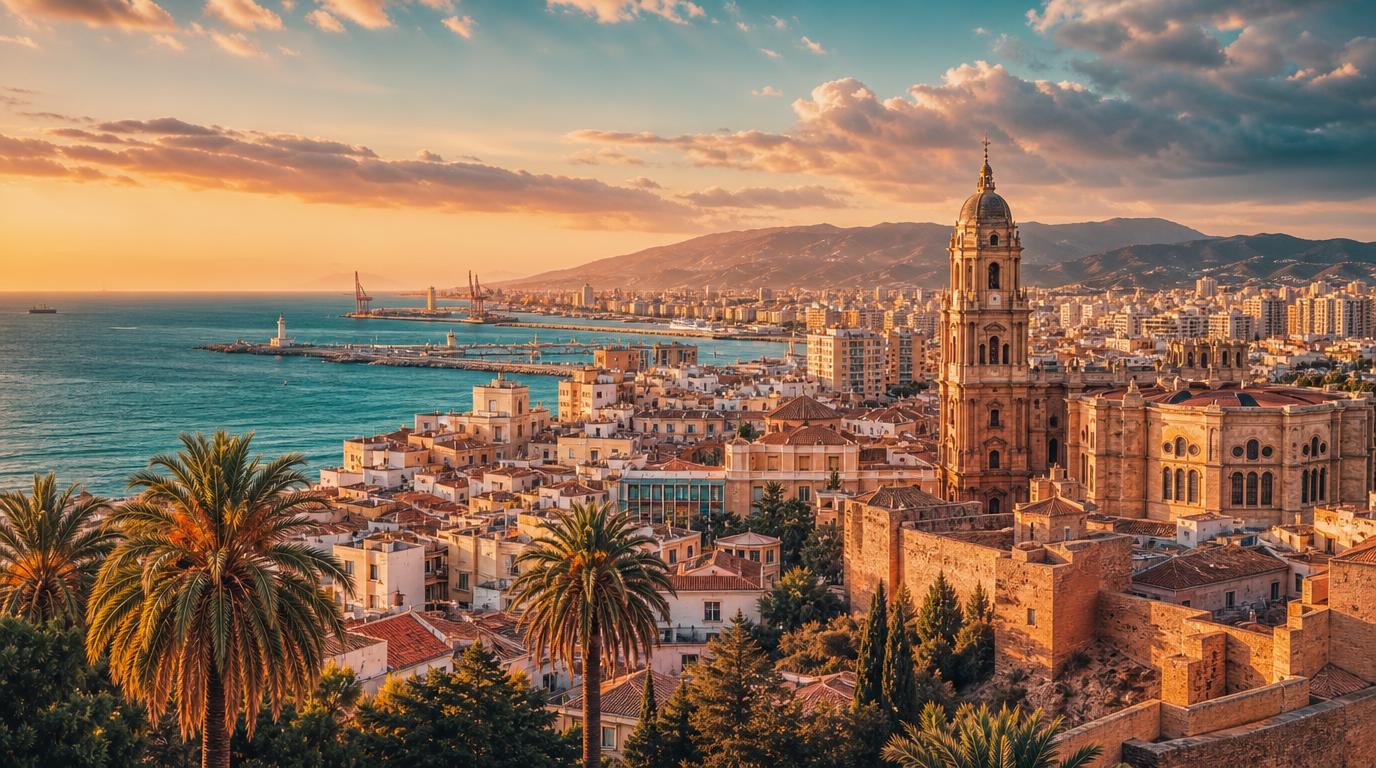
Malaga pairs a working city, an international airport, and a straightforward route to Spain’s digital nomad visa on the Costa del Sol. This guide breaks down what remote workers actually pay for rent and daily living, real internet speeds, 2026 visa requirements, and which neighborhoods fit different working styles. Every figure below is checked against Numbeo, Spanish government visa data, and local cost trackers as of August 2026.
Internet speed and coworking spaces
Malaga’s fixed broadband averages between 214 and 233 Mbps, with home connections typically landing anywhere from 92 to 430 Mbps depending on the building and provider. Mobile data runs close to 178 Mbps on average, well past what a video call needs.
- Fixed broadband average: 214–233 Mbps download, around 98 Mbps upload
- Mobile average: around 178 Mbps download
- Fastest providers: Digi and Orange lead on raw speed, Movistar tops mobile averages
- Coworking options: The Living Room in Soho, Malaga Next Coworking, Regaña Coworking, Impact Hub Málaga, and Innovation Campus Coworking, which also offers 24/7 access and co-living
This is fast enough that testing a rental’s wifi before booking usually isn’t necessary. The real variable is finding a quiet desk during Malaga’s busy lunch and dinner hours, which is where the coworking spaces earn their monthly fee.
Cost of living in Malaga
A single remote worker can live comfortably in Malaga on €1,400 to €2,000 a month, all-in. Rent is the biggest swing factor, and it has climbed 30 to 40% since 2022 as digital nomad and expat demand pushed into the city center.
- 1-bedroom, city centre: €850–1,300/month
- 1-bedroom, outside centre: €650–1,000/month
- Monthly costs excluding rent, single person: around €707
- Utilities, 85m² apartment: around €126/month
- Unlimited home internet: around €23/month
- Groceries, one person: €90–150/month, mostly at Mercadona, the dominant local chain
Living just outside the historic core, in Teatinos or Huelin for example, cuts rent by €200 to €400 a month without adding a real commute, since Malaga’s metro and bus network cover the city well. Anyone earning in dollars or pounds still gets real headroom here, though the days of Malaga being a rock-bottom budget base are behind it.

Digital nomad visa requirements for Spain
Spain’s digital nomad visa is open to non-EU citizens working remotely for employers or clients based outside the country. EU citizens don’t need any visa to live and work in Spain.
- Minimum income: €2,849/month (€34,188/year), 200% of Spain’s 2026 minimum wage
- Dependents: add €1,068/month for the first family member, €356 for each additional one
- Spanish income cap: no more than 20% of income from Spanish clients
- Work history: at least three months with the current employer or clients before applying
- Duration: one year if applied for from your home country, up to three years if applied for from inside Spain, renewable to five years total
- Processing time: around 20 business days when applying in-country through Spain’s UGE unit
- Tax option: qualifying holders can apply for the Beckham Law flat 24% tax rate on income up to €600,000, for up to six years
Anyone just testing out Malaga first doesn’t need any of this. Most passports get 90 visa-free days in Spain within any 180-day period under the Schengen rule, enough time to try a neighborhood before committing to the full application.
Timezone fit for remote work
Malaga runs on Central European Time, the same zone as Germany, France, and most of continental Europe. It sits one hour ahead of the UK and six hours ahead of US Eastern.
- UK and Central Europe: full overlap, standard business hours align
- US Eastern: best overlap falls in Malaga’s afternoon, 3 to 6pm local, landing at 9am to noon Eastern
- US Pacific: overlap narrows to Malaga’s early evening, 5 to 7pm local, matching 8 to 10am Pacific
This makes Malaga a strong base for anyone working with European or UK teams, and a workable if narrower base for East Coast clients. West Coast async work holds up fine, but daily live meetings on Pacific hours will eat into Malaga evenings.
Best areas to live in Malaga
Malaga’s neighborhoods split fairly cleanly along one trade-off: walkability and coworking density versus beach quiet versus rent savings.
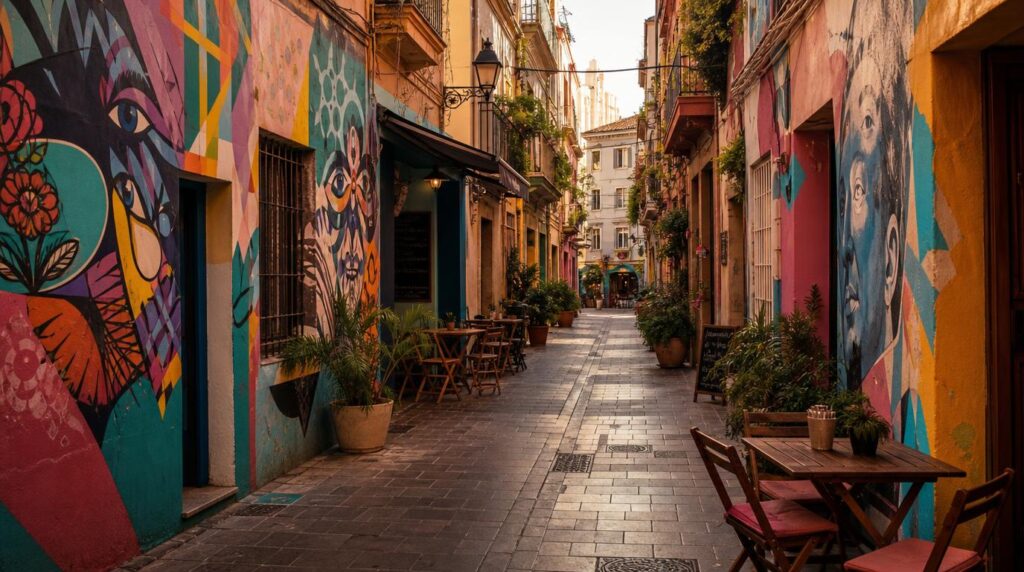
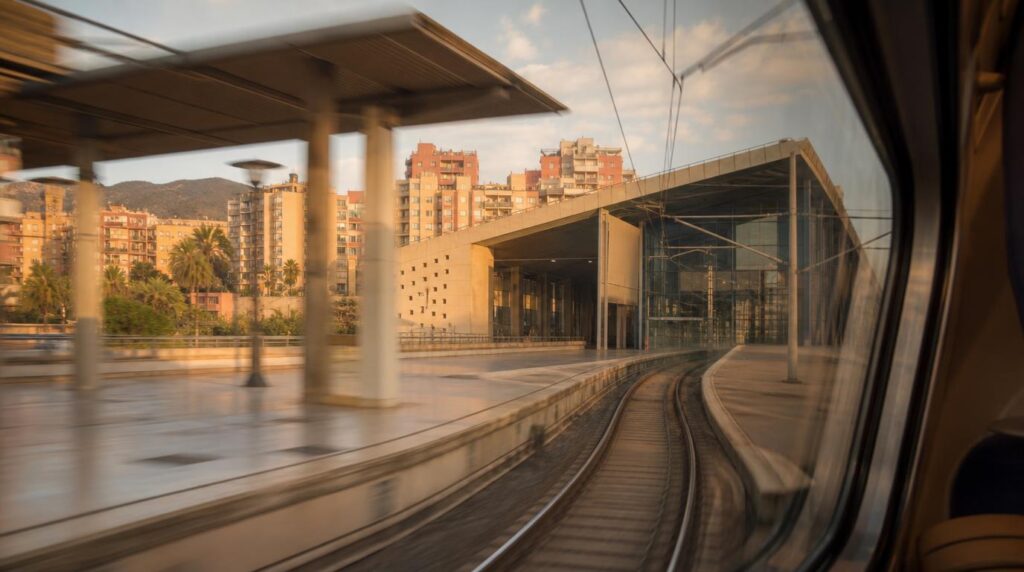
- Soho: the arts district, street art and galleries, home to The Living Room coworking space and an easy walk to Maria Zambrano train station. Rents track close to city centre averages.
- Centro Historico: the most walkable and culturally dense option, though also the most touristy and the priciest per square meter.
- Pedregalejo and El Palo: former fishing villages turned beachfront neighborhoods, with rents 20 to 30% below the centre and a quieter, more local daily rhythm.
- Teatinos: the university district, with studios from around €550 to €800/month, the cheapest solid option, though it sits further from the beach and skews younger.
- Huelin: beach-adjacent and west of the centre, with good transport links and lower rents, generally overlooked by nomads chasing Soho or Pedregalejo.
Soho and Centro suit anyone who wants to work from cafes and coworking spaces without a commute. Pedregalejo, El Palo, and Teatinos suit longer stays where daily cost and quiet matter more than being five minutes from the cathedral.
Safety in Malaga
Malaga’s Numbeo safety index sits around 69 to 70, and its crime index runs roughly 29 to 35, both comfortably on the safe side for a European coastal city. Violent crime is rare.
- Main risk: pickpocketing in Centro Historico, Calle Larios, and along La Malagueta beach
- Common scams: the “flower” or fortune-telling trick, fake charity collectors, and unsolicited “help” from strangers
- One area to know: Palma-Palmilla, in District 5, has a reputation for drug-related crime and is generally worth avoiding
- At night: well-lit central areas and Soho stay busy and safe, and licensed taxis, Uber, Cabify, or Bolt are the better option over quiet side streets
None of this is unusual for a city this size, and most nomads describe Malaga as one of the more relaxed Spanish bases day to day. Standard precautions, like not leaving a phone on a café table, cover nearly every real risk here.
Best time to visit or relocate
Malaga gets over 300 sunny days a year, which makes the climate less of a factor here than in most European bases. The bigger question is crowds and rental pricing.
- Spring (March–May): 15–25°C, mild and blooming, a good window for scouting neighborhoods before summer demand hits
- Summer (June–August): peak season, 30–35°C, the highest short-term rental prices and the biggest tourist crowds
- Fall (September–November): 20–28°C, warm sea, fewer tourists, often called the best all-round window
- Winter (December–February): 12–18°C, mild and quiet, the cheapest months and also the rainiest, alongside November
Anyone relocating rather than just visiting gets the clearest read on Malaga during spring or fall, before or after the summer surge skews both prices and the feel of the city.
Who Malaga is for (and who should skip it)
Malaga works best for remote workers on European or UK hours who want real beach access alongside actual city infrastructure, not a resort town.
- Good fit: non-EU nomads eligible for the digital nomad visa who want a straightforward EU base with English-speaking coworking hubs
- Good fit: anyone who values timezone overlap with Europe over the cheapest possible rent
- Skip if: your work runs on US Pacific hours with daily live meetings
- Skip if: you’re chasing the lowest-cost EU base, since Alicante and Valencia both undercut Malaga on rent
- Skip if: you want deep local friendships fast without speaking Spanish, several longtime nomads note this takes real effort here
Malaga delivers real internet speeds, a workable cost of living even after recent rent increases, and one of Europe’s more accessible digital nomad visa routes. Pedregalejo and Teatinos cover the budget end, Soho covers the coworking-dense end, and the city’s public transport ties both together without needing a car. If Malaga fits your next stretch of remote work, search flights on FlyBibe and start planning the move.