
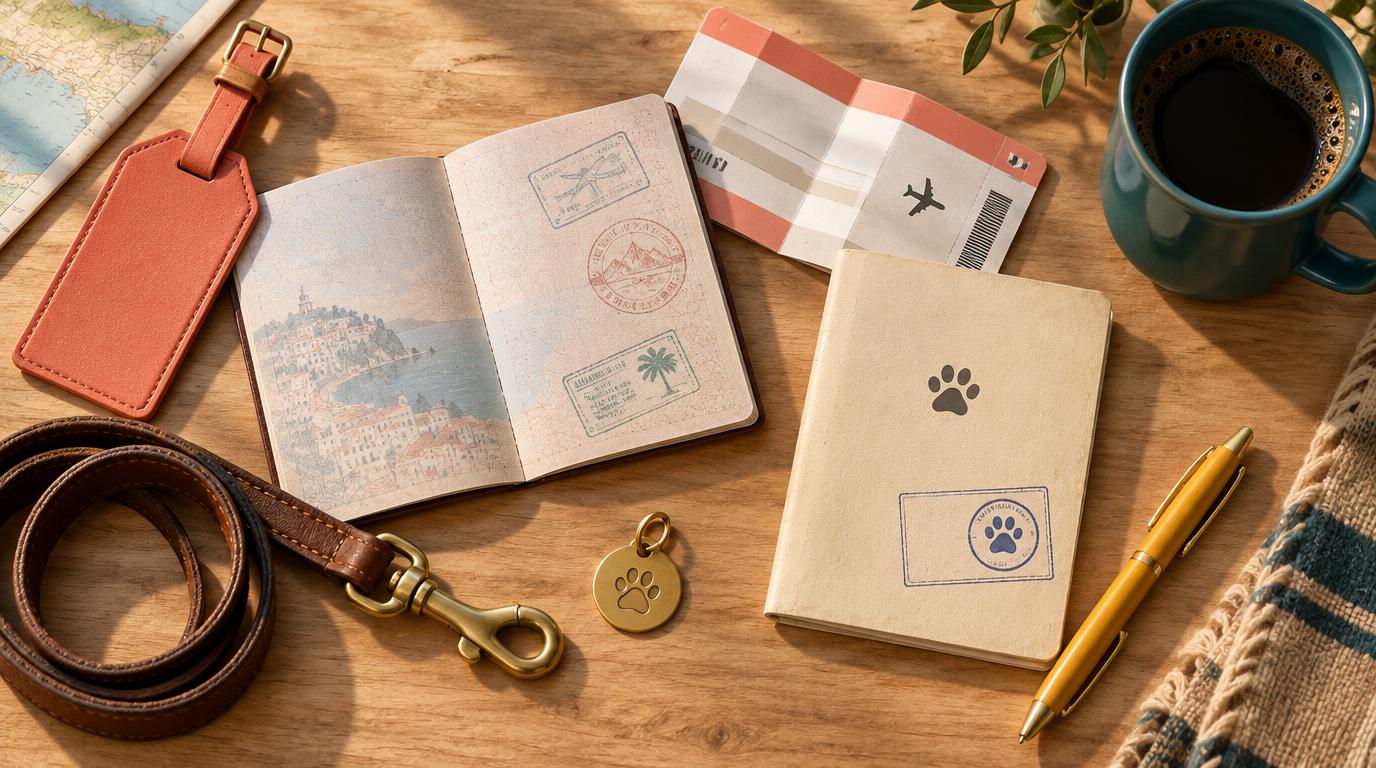
Flying across borders with a dog or cat takes more planning than buying a ticket. The destination country sets the health and paperwork rules, and the airline sets its own pet policy on top of them. The steps below follow the order most nomads need them, from entry rules to airport check-in. The details were checked in October 2026. Rules can change, so each one is worth confirming with the airline and the destination’s official agency before paying.
The Steps to Fly With a Pet Abroad
1. Check the Entry Rules for Your Destination
The destination country decides what a pet needs to enter. According to USDA APHIS, the United States does not issue pet passports, because requirements differ by country. A few popular nomad bases show how much the rules can vary.
- Thailand: Pets need an import permit from the Department of Livestock Development. PetRelocation advises applying 7 to 60 days before departure. A US health certificate stays valid for only 10 days after endorsement. Thailand’s agriculture ministry also lists a 500 baht cash fee per animal on arrival.
- Bali, Indonesia: Pets cannot enter through Bali directly. They clear quarantine at a mainland port such as Jakarta, Surabaya, or Medan first, according to PetRelocation. The import permit commonly takes 4 to 8 weeks. Quarantine length depends on the origin country, and some guides report 7 to 14 days.
- European Union: The pet needs an ISO microchip, then a rabies vaccine, then a 21-day wait. The USDA-endorsed EU health certificate must be used within 10 days. According to PetRelocation, the pet should also fly on the same flight as the owner to count as non-commercial travel.
- Great Britain: According to UK government guidance, dogs need tapeworm treatment between 24 and 120 hours before arrival. Pet dogs and cats cannot fly into Great Britain in the cabin and arrive as cargo instead. Recognized assistance dogs are the exception.
- United States: Dogs entering or returning must be at least 6 months old, microchipped, and covered by a CDC Dog Import Form receipt. Cats only need to appear healthy on arrival, according to the CDC. A dog that leaves the country must meet the rules again to come back.
Starting with the destination matters because it decides which airlines and routes are possible at all.
2. Build a Timeline Backward From the Flight Date
Pet paperwork follows a fixed order with waiting periods, so the calendar matters as much as the fare.
- 3 to 4 months out: One Bali pet import guide recommends starting this early, because vaccines, blood tests, permits, and quarantine all take time.
- At least 21 days before departure: The first rabies vaccine needs time to count. The EU, Great Britain, and Thailand all use a 21-day wait.
- Microchip first: The microchip must go in before, or at the same time as, the rabies vaccine for travel to the EU and Great Britain.
- Within 10 days of departure for the EU and Thailand: A USDA-accredited vet issues the health certificate. In many cases USDA endorses it online through its VEHCS system.
Airline pet spaces are limited on each flight, so the airline booking in step 6 belongs near the start of this timeline. Fares follow their own schedule, and a guide to when to book international flights covers the usual window.
3. Pick Cabin, Checked Baggage, or Cargo
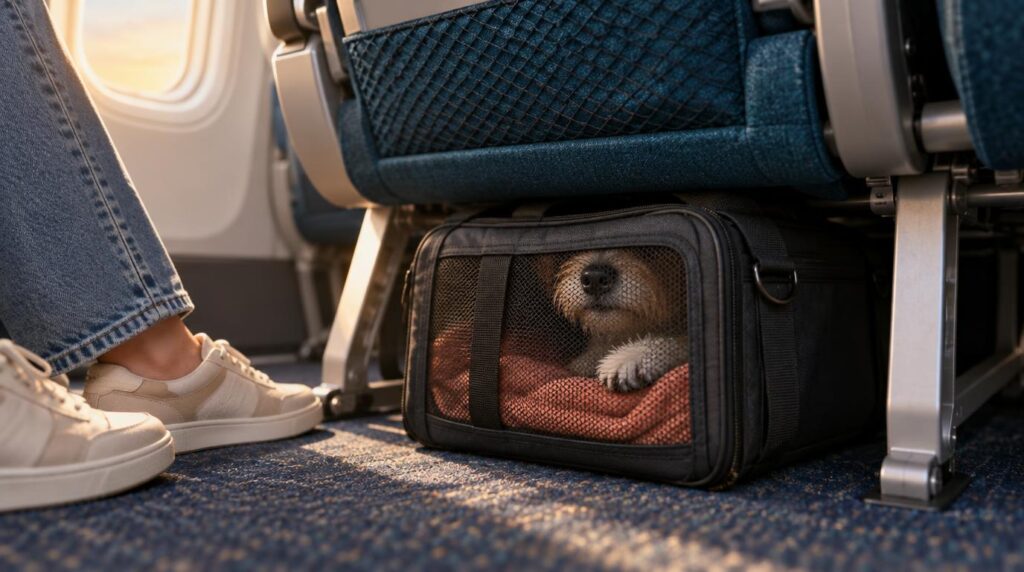
Small pets can often ride under the seat. Larger pets travel in the hold, and some airlines accept no pets in the cabin at all.
- Cabin limits: Lufthansa and Turkish Airlines both cap the pet and carrier together at 8 kg, according to 2026 airline guides.
- Hold only: Qatar Airways does not allow cats or dogs in the cabin. Pets travel as checked baggage or cargo instead.
- Route bans: Delta does not allow cabin pets to or from the United Kingdom, Australia, New Zealand, the United Arab Emirates, or Hong Kong, according to PetRelocation. Turkish Airlines does not carry pets on flights that end in England, including connections.
- Cabin class: Turkish Airlines stopped accepting pets in business class for new bookings made from April 21, 2026. Delta also bars pets from its premium cabins on international flights.
- Fees: Cabin fees start near $75 on Turkish Airlines and reach $150 one way on Delta. Lufthansa charges about €110 to €160 on long international flights. Cargo often costs $1,000 or more.
Many airlines charge the pet fee for each flight leg. Nomads often buy one-way tickets, so a route with one connection can add a second fee. Carrier rules also differ. Some airlines count the carrier as your only cabin bag. Others allow it on top of the hand luggage, so the baggage allowance on the ticket is worth checking.
4. Check Breed, Age, and Weather Limits
Airlines and countries also set limits based on the animal itself.
- Snub-nosed breeds: Short-faced dogs and cats can struggle to breathe and cool down, and many airlines refuse them in the hold. Alaska Airlines does not carry snub-nosed dogs in cargo, and Qatar Airways does not accept snub-nosed cat breeds such as Exotic and Persian. Turkish Airlines accepts flat-nosed pets in the cabin only.
- Heat limits: Airlines restrict pets in the hold when any airport on the route passes about 27 to 30°C (80 to 85°F), according to PetTravel.com. One hot day at a connecting airport can trigger the limit.
- Age: Thailand requires pets to be at least 4 months old, and the CDC sets 6 months for dogs. Great Britain requires a rabies vaccine at 12 weeks plus a 21-day wait, so pets cannot enter before 15 weeks.
- Banned breeds: Indonesia bans Pit Bull, Dogo Argentino, and Japanese Tosa dogs, according to Expat Exchange. Great Britain bans certain breeds unless the dog holds an exemption certificate.
A pet that fails one limit may need a different airline or a different travel season.
5. Choose a Direct Flight When Possible
Each connection adds a transit country, a longer day for the pet, and another chance for a rule to apply.
- Transit rules: Thailand requires an import permit for any live animal passing through Bangkok, according to PetTravel.com.
- Relief areas: IATA says pet relief areas at connecting airports vary widely, and some airports have none.
- Missed connections: A shorter itinerary lowers the chance of a missed connection, which can be harder to handle with a pet on board.
- Stopover programs: Free stopover programs can add a second city, but each extra country may bring its own pet rules.
You can compare direct flights to your destination on FlyBibe before you contact the airline about the pet.

6. Book the Pet’s Space With the Airline
According to IATA, many online travel agents and search sites cannot add a pet to a ticket. Owners often need to contact the airline directly. IATA is also formalizing a booking code, PETC, for “Pet in Cabin”.
- Delta: Owners must call Delta Reservations to add a pet to a booking, according to PetRelocation.
- Turkish Airlines: Pet rights can be bought on the website or app up to 6 hours before departure. One passenger can book two pets, but only one carrier is allowed in the cabin.
- Space limits: Airlines cap the number of pets per flight, so early booking is recommended.
Written confirmation from the airline can settle any confusion at check-in.
7. Prepare the Carrier and Documents for Airport Day
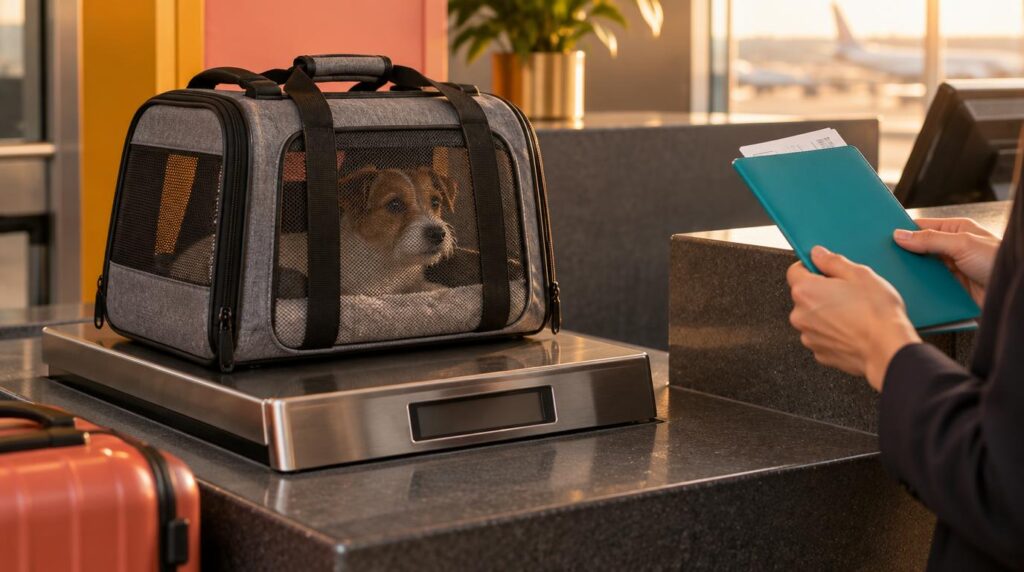
Check-in staff can refuse a pet when the carrier or the paperwork does not meet the rules.
- Carrier: IATA guidance says an in-cabin carrier must fit under the seat and carry a “Live Animals” label. The pet must be able to sit, stand, turn around, and lie down inside. Size limits differ by airline; for example, 40 x 30 x 23 cm on Turkish Airlines. IATA also advises getting the pet used to the carrier before the trip.
- Documents: Some destinations require the endorsed paper health certificate rather than a digital copy, according to USDA APHIS country pages. Vaccination records and import permits belong in the same folder.
- Microchip: Great Britain refuses entry or applies quarantine when a microchip cannot be read. The UK government advises bringing a reader when a chip does not meet ISO standards.
- Arrival time: Some pet shipping checklists suggest reaching the airport at least 3 hours early for international flights with a pet.
Mistakes That Can Cost You Weeks
Two paperwork errors can restart the clock.
- Microchip after the rabies vaccine: The EU does not recognize a rabies vaccine given before the microchip, according to PetRelocation. Both the EU and Great Britain require the microchip first, so the vaccine and the 21-day wait must be repeated.
- Wrong health certificate: Some owners use a general vet certificate instead of the official form for the destination. USDA can endorse only the certificate that the destination requires, according to its pet travel guidance.
Emotional support animals are a separate issue. A 2020 US Department of Transportation rule lets airlines treat them as ordinary pets, so the usual carrier, size, and fee rules apply. Qatar Airways does not recognize them in the cabin at all.
Plan the Flight With Your Pet
Flying with a pet takes many steps, and each one has a clear rule once the destination is known. The route comes first, then the airline’s confirmation of the pet’s space, then the paperwork in the right order. When the dates are set, you can search flights to your new base on FlyBibe and book a route that works for you and your pet.