
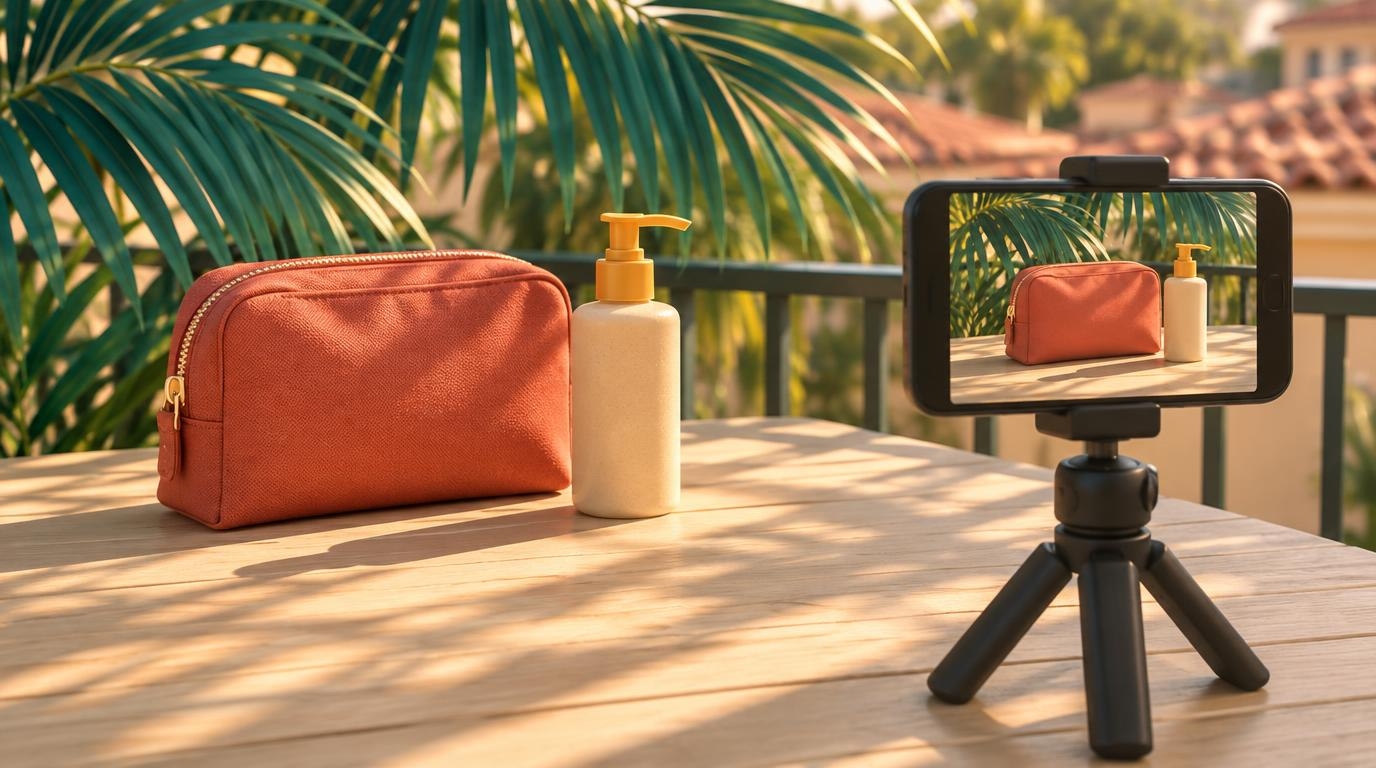
A UGC creator films short videos or photos for brands, and the brand posts them or runs them as ads. This guide explains how to start while you travel, including which platforms accept travelers, what the work pays, and how shipping, wifi, and taxes can affect a nomad. No platform promises income, so each figure below names its source.
What UGC Work Pays and Costs to Start
Pay varies widely, and the sources below measure different things.
- Advertised budgets: A Pitchlo report of 645 per-video briefs posted between December 2025 and October 2026 found a median offer of $100. Half of the listings fell between $50 and $200, and the top tenth offered $338 or more. Those figures are advertised budgets and may differ from final invoices.
- Experience bands: UGCJobs 2026 data, reported by Argil, puts creators in their first six months at about $50 to $100 per video. Creators with two or more years of proven work reach $500 to $1,500 or more. Some sites publish much higher averages without naming a sample, so this guide uses only sourced figures.
- Marketplace averages: Collabstr’s 2026 report, cited by Hoo.be, put the average UGC collaboration on its platform at $154. Backstage reports that roughly 80% of Collabstr collaborations come in under $300.
- Niche ranges: Launchpoint’s 2026 rate guides, reported by Backstage, list $300 to $1,500 per video for tech and software. Beauty runs $150 to $500, and food and drink runs $150 to $600. Those guides do not list travel, so no sourced travel-niche figure was found.
- Startup cost: A recent smartphone you already own can cover the filming. Joining Billo and Insense is free, and JoinBrands has a free plan, although platforms keep a share of each payout.
- Time to first payment: No platform publishes an average. Billo reviews a new video pitch within 7 business days, and brands have 3 business days to approve a finished video. Plan for several weeks before the first payment arrives.
- Main limitation: Several structured platforms accept creators only from a short list of countries, which matters when you travel. Step 3 covers the details.
Most of the beginner figures above sit between about $50 and $200 per video. UGC is one route inside the wider field of content creator income, which has its own realistic earning ranges.
Step-by-Step: Becoming a UGC Creator on the Road
1. Choose What You Will Film
Brands hire UGC creators by product type and video format, so a clear focus helps a new portfolio look organized.
- Product types: Travel-friendly products such as bags, apps, skincare, and snacks are easy to film in a rental apartment or coworking space.
- Formats: Insense names unboxings, product demos, tutorials, and testimonials as common formats.
- On camera and voice-over: Insense asks UGC-only applicants for examples of both on-camera speaking and voice-over, so a portfolio needs both styles.
Insense wants at least two product categories, so a portfolio can cover a few lanes. Starting with one clear lane, such as travel gear or skincare, can make pitches easier to write.
2. Build a Portfolio of 6 to 12 Videos

Platforms and brands judge new creators by sample work.
- Insense requirements: Insense asks for 6 to 12 videos, at least two categories, at least two formats, good lighting, audio, and editing, and no filters or watermarks.
- Insense route: Insense limits its UGC-only route to people whose standard creator application was denied because of account metrics. A new creator applies as a regular creator first, and a rejected UGC-only applicant can resubmit after 14 days.
- Billo pitch: Billo asks for a video pitch of up to 30 seconds with HDR turned off. Its creator page says no professional experience or social media presence is required.
- Sample videos: Film products you already own and use. The FTC rule in step 7 bans testimonials from people without real experience of the product.
A portfolio can often be filmed in a few days in one location, because the same room, window light, and phone can serve most samples.
3. Join Platforms That Accept You From Where You Travel
Each platform sets its own location, age, and payout rules. The details below come from the platforms’ own pages, checked in November 2026.
- Billo: Billo’s creator page says creators must live in the United States, Canada, the United Kingdom, or Australia and be at least 18. A help article lists only the US, UK, and Canada, so the current list is worth confirming in the app. Billo may ask for a passport or identity card. Creators see the pay for each job before applying.
- JoinBrands: The company lists the US, UK, Germany, Australia, and Canada, with a minimum age of 18, while an older help page mentions only the US. PayPal is the only payout method, and the PayPal address must match the profile for verification. A trade publication reported that JoinBrands expects creators to be physically in the market where they make promotional content. The platform fee is 20% on the free plan and 15% on Creator Pro, according to a June 2026 company post.
- Insense: Insense offers a free creator app and a UGC-only route that starts with a portfolio review. The help pages checked for this article did not state a payout method or fee, so both are worth confirming before applying.
- Collabstr: Creators list priced packages, and brands book them directly. Collabstr takes 15% of the payout, and its payout system covers 150 countries with all transactions in USD. On a $150 package, the creator receives $127.50.
- Fiverr and Upwork: A Collab Only comparison lists Fiverr as a self-priced option with UGC rates from $30 to $500 or more. A comparison of Fiverr and Upwork covers fees and fit for nomads.
Collabstr appears to have the widest payout reach of the four. Billo and JoinBrands tie accounts to a home market. The pages checked do not say whether an account stays active during a long trip. Asking support in writing before leaving, and keeping profile details accurate, may help avoid a suspended account.
4. Set Rates and Price Usage Rights

A brand pays for the video and also for the right to run it as an ad. Billo’s blog lists general direct-deal benchmarks for those extras, and Billo does not present them as its own rates.
- Paid ads usage: 15% to 30% of the base fee per 30 days.
- Partnership ads or whitelisting: 25% to 50% of the base fee per 30 days.
- 12-month usage: 70% to 100% of the base fee.
- Perpetual buyout: 150% to 300% of the base fee.
- Exclusivity: Quoted separately.
As a worked example, take a $150 base video. Thirty days of paid ads usage at 15% to 30% adds $22.50 to $45, for a total of $172.50 to $195. A 12-month license at 70% to 100% adds $105 to $150, for a total of $255 to $300.
On Billo, full usage rights come with the job price after approval. Creators set separate prices for posting on their own account and for partnership ads. Billo reported that half of active creators earned at least one paid extra in September and October 2026. Direct deals leave usage pricing to the creator, and a guide to setting freelance rates covers the wider pricing method.
5. Pitch Brands Directly
Platforms take a fee and limit locations, while a direct pitch lets a creator set the full price.
- Where to look: Brand websites often list a creator or ambassador page, and a short email to a marketing team is another route.
- Check the offer type: Influee reports that most public ambassador programs are affiliate programs, with a discount code and a sales commission and no payment for content.
- Gifted product is not pay: Influee also reports that product seeding made up 31% of Aspire campaigns in 2025. The share was 20% the year before, so requests for free content are common.
- What to send: Two or three sample videos, a short rate card, and usage terms in writing.
A guide to finding freelance clients covers outreach in more detail.
6. Plan Shipping, Wifi, and Deadlines Around Travel

Travel adds three practical problems to UGC work.
- Product shipping: Billo asks brands to ship free product to the creator’s address, and brands cover customs duties and import fees where applicable. JoinBrands lets brands choose reimbursement for a purchase, and the brand does not have to cover taxes or shipping for the creator.
- Upload speed: Video files are large, so it helps to check wifi speed before booking a stay.
- Camera settings: Billo’s help center has a page of camera settings and resolution requirements. It says HDR should be off because HDR can change colors on upload.
- Deadlines: Billo tracks an on-time delivery score, and Premium creators need a near-perfect score.
Stays of a few weeks in one place suit jobs that ship a physical product. App, software, and digital briefs avoid the shipping problem. Travel days can delay uploads, so building buffer days into each deadline may protect a delivery score.
7. Follow Disclosure Rules and Avoid Fake Offers
- FTC disclosure: The FTC says a creator must make a brand connection obvious when the audience would not expect it. A material connection includes payment or free product. The disclosure belongs with the endorsement itself and in the same language.
- Fake reviews rule: The FTC’s rule on consumer reviews and testimonials took effect on October 21, 2024. According to law firm summaries, it bans fake or false testimonials, including those from someone without actual experience of the product, and allows civil penalties.
- Other countries: Advertising rules differ by country, so the market where an ad runs sets the rules to check.
- Fake job offers: The FTC says honest employers do not ask people to pay to get a job. It lists starter kits, training, and certifications as common scam fees, and it also warns about fake checks and unexpected recruiter texts.
- Paid programs: The platforms above are free to join, and JoinBrands sells an optional Creator Academy membership. Its help pages and blog show different prices, so the current price is worth checking.
8. Get Paid and Track Taxes

- Payout routes: Billo pays US, Canadian, and UK creators through Stripe within 3 days of approval. Creators choose a payout currency, and Billo covers the transfer fees. JoinBrands pays through PayPal only, and Collabstr pays in USD to creators in 150 countries.
- Receiving money abroad: A guide to international payment platforms compares ways to receive client money while living abroad.
- United States: For tax year 2026, the IRS says self-employment tax is 15.3%, made up of 12.4% for Social Security and 2.9% for Medicare. It applies when net self-employment earnings reach $400, and Schedule SE reports it. US freelancers abroad can read about quarterly estimated taxes.
- United Kingdom: According to the Low Incomes Tax Reform Group, HMRC’s trading allowance covers up to £1,000 of gross trading income a year. Income above that amount generally means registering and filing.
- Travel and residency: The country that taxes income can change with where a person lives. A guide to avoiding double taxation explains how tax treaties work.
This section is general information, not legal, tax, or financial advice. A qualified tax professional can address individual circumstances.
A Common Mistake: Unpriced Usage Rights and Free Product
New creators often accept a low base fee and let the brand run the video as an ad for free. Some also accept gifted product as payment.
- Usage rights: In direct deals, ads usage, partnership ads, and longer licenses are separate line items in the benchmarks above.
- Gifted product: Free product is a common request, and it does not pay for travel, rent, or software.
- Written terms: A short agreement that states the fee, the usage period, and the number of revisions keeps both sides clear.
Next Steps for a Traveling UGC Creator
A small portfolio, two or three accepted platforms, and a written rate card are enough to send the first pitches. A stay of a few weeks in one place can make shipping and deadlines easier to manage. When you choose the next base, search flights on FlyBibe, where we filter results by wifi, visa rules, and cost as well as price.