

Getting paid by a client in another country can cost close to nothing with one platform and more than 7% of the invoice with another. The cost depends on the platform, the currencies involved, and how the client pays. This list covers seven options for nomads. Each entry gives the fees, the country limits, and one real drawback.
How These Platforms Were Compared
Each platform was compared on what the sender pays, what you pay to receive money, what you pay to convert currency, and whether the account keeps working when you move between countries. Fees were checked in October 2026, mostly on each provider’s own pages. They change by country and by account type.
The list goes from the options that suit many nomads to the ones that suit narrower cases. Fees come out of your income, so they belong in how you set your freelance rates. If you still need an account to start with, opening a bank account without local residency comes first.
1. Wise Business
Wise gives you local bank details. A client in the US, the UK, or Europe can then pay you the way they would pay a neighbor.
- Account details: Local details for USD, EUR, GBP, and many other currencies, so you do not need to open a bank account abroad.
- Setup fee: A one-time fee activates the details. Wise lists 45 GBP in the UK and 60 EUR in Finland.
- Receiving fee: Free for local payments. A USD wire costs 6.11 USD per incoming payment on Wise’s UK pricing page.
- Exchange rate: Wise says it uses the mid-market rate with no markup. A small conversion fee still applies.
Availability depends on where you live and where your business is registered. According to Slash, a competing business bank, Wise Business does not issue USD details to businesses with an address in Nigeria, Pakistan, Türkiye, the UAE, or Sri Lanka. WorldFirst reports send-only personal accounts in Nigeria, Morocco, Ghana, and Kenya. Doola adds that a move to an unsupported country may lead Wise to switch off details you already use. Raenest offers business accounts with USD, GBP, EUR, and NGN details in Nigeria, Kenya, and Ghana, according to WorldFirst.
Best for: freelancers paid by clients in the US, the UK, or Europe who live in a country Wise supports.
2. Payoneer
Payoneer suits nomads who get paid through marketplaces or agencies. Many freelance platforms pay into it, including Upwork and Fiverr, according to Payoneer.
- Receiving accounts: Details in USD, EUR, GBP, and more. Receiving the main currency of your region carries a low fixed fee or none. Receiving another currency, such as USD in Europe, costs 1% with a 1 USD minimum.
- Client payment requests: Up to 3.99% when the client pays by card, and 1% for US bank debit.
- Withdrawal: 1.50 USD to a local bank in the same currency. A withdrawal into a different currency costs 1.2% to 4%.
- Annual fee: 29.95 USD if you receive less than 6,000 USD in any 12 consecutive months. Some third-party sources list a lower threshold, so it is worth checking your own account.
The cost depends mostly on whether the currency stays the same at each step. A USD payment withdrawn to a USD bank account stays cheap. A USD payment withdrawn into a local currency can cost up to 4%.
Best for: freelancers paid by marketplaces or agencies that already use Payoneer.
3. Revolut Business
Revolut Business puts payments, cards, and currency exchange in one app. The service suits nomads who have a registered company.
- Plans: Basic costs 10 GBP a month, Grow costs 35 GBP, and Scale costs 125 GBP in the UK. Prices differ by country.
- Exchange allowance: Each plan includes free monthly exchange of 1,000 GBP (Basic), 15,000 GBP (Grow), or 60,000 GBP (Scale). Above the allowance, a 0.6% fee applies.
- International transfers: Basic charges 5 GBP per transfer. Grow includes 5 a month and Scale includes 25.
- Who can open: Registered companies. Sole traders and freelancers can use Revolut Pro inside the personal app. Registered freelancers can open a Business account in a list of European countries.
Revolut publishes allowances for sending money and exchanging currency. Receiving terms depend on your country and account type, so they are worth confirming before you give account details to a client. The monthly fee applies even in a quiet month.
Best for: nomads with a company in a supported country who want one app for payments, cards, and exchange.
4. Mercury
Mercury is an online US business account. The account requires a US company, so the first step is starting an LLC.
- Eligibility: Mercury says it supports US companies founded by people around the world. Mercury cannot open accounts for founders who live in the countries on its prohibited list.
- Prohibited list: When checked in October 2026, the list included Nigeria, Indonesia, Vietnam, the Philippines, Cambodia, Croatia, and Albania. Several popular nomad bases are on it.
- Identity: Third-party reviews say a founder outside the US can apply with a passport and does not need a Social Security number.
Some reviewers report that foreign-owned LLCs are turned down more often. Reviewers also name Relay as a backup if Mercury refuses an application.
Best for: nomads with a US LLC who bill US clients and live in a country Mercury accepts.
5. Deel
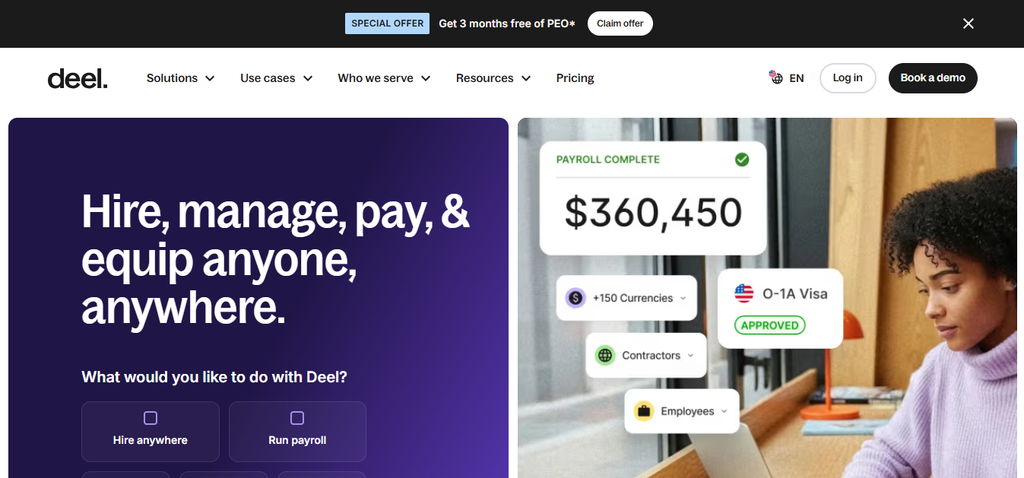
Deel is a platform that companies use to pay freelancers. A client must already use it, so the choice usually belongs to the client.
- Cost to you: Deel does not charge contractors a monthly fee. Withdrawal costs depend on the method.
- Withdrawal options: SWIFT costs 5 USD. Payoneer costs 1% with a 12 USD minimum. Deel does not charge for withdrawals to Wise or Revolut, although those providers may add their own fees.
- Other fees: SWIFT withdrawals can also carry intermediary bank fees.
- Instant option: The Deel Card gives instant access to USD with no card fee, according to Deel.
Linking a Wise or Revolut account lets you avoid Deel’s own withdrawal fee.
Best for: contractors whose clients already pay through Deel.
6. Stripe
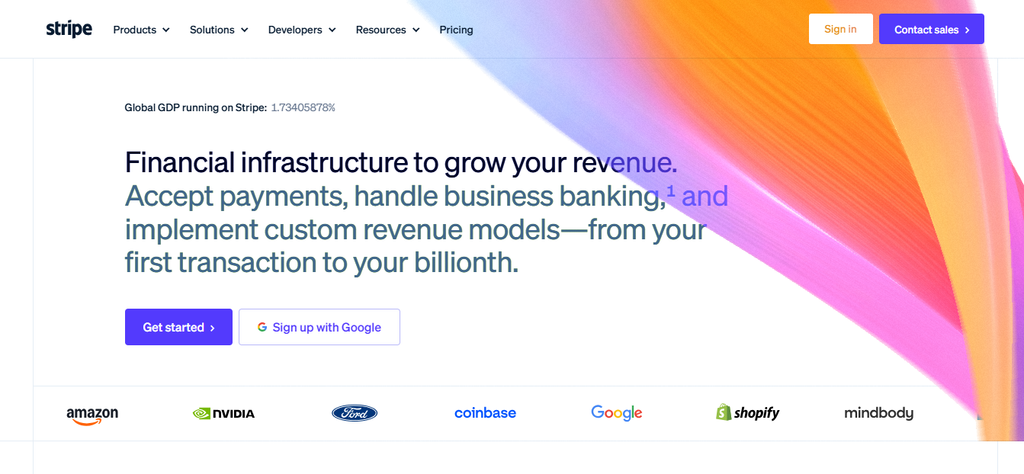
Stripe lets you send invoices that clients pay by card. Stripe lists support for businesses in 46 or more countries, so your country needs to be on that list.
- Card fee (US account): 2.9% plus 0.30 USD for domestic cards.
- International cards: An extra 1.5%.
- Currency conversion: An extra 1% when Stripe converts the currency.
- Invoicing: A further 0.4% on each paid invoice, according to third-party fee guides.
On a 1,000 USD invoice paid by an international card, the card fees are 44.30 USD. If Stripe also converts the currency, the fees are 54.30 USD. The invoicing charge comes on top.
Rates differ by country. Third-party guides list UK accounts at 2.5% plus 0.20 GBP for EEA cards and 3.25% for other cards, with a 2% conversion fee. The figures above come from those guides, so Stripe’s own pricing page is the place to confirm rates for your country.
Best for: freelancers with a registered business who bill many small clients that prefer paying by card.
7. PayPal
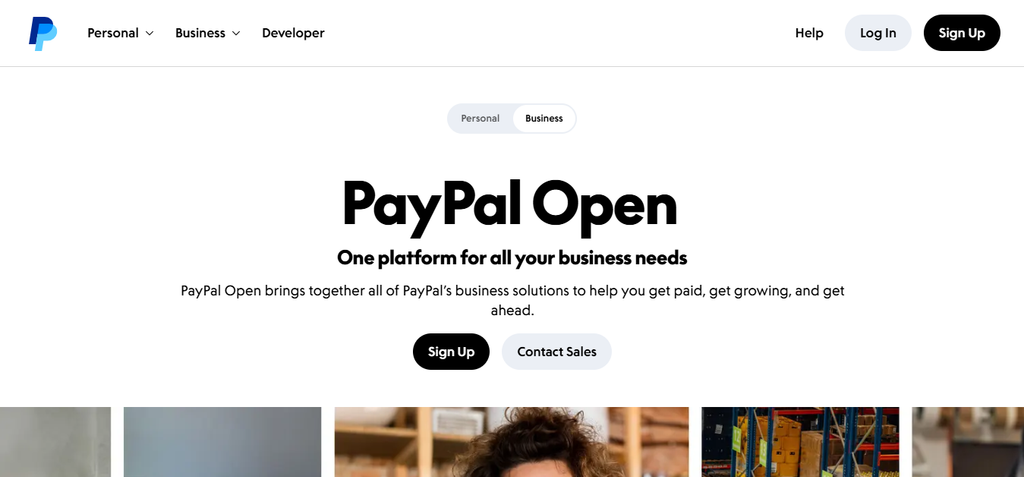
PayPal is the easiest option for many clients because they already have an account. The service is also one of the most expensive options on this list.
- Invoice fee (US account): 2.99% plus 0.49 USD for card payments, and 3.49% plus 0.49 USD for PayPal Checkout.
- International payments: An extra 1.50%.
- Currency conversion: A 3% spread on most conversions and 4% when the sender pays in a different currency.
- Withdrawal: Free to a bank account when no conversion applies. Instant withdrawal costs 1.50%.
The figures come from PayPal’s US merchant fee page, last updated October 1, 2026. Accounts in other countries have different rates.
A 1,000 USD invoice paid by card from abroad costs 45.39 USD in fees. If PayPal then converts the rest into another currency at 3%, the total reaches about 74 USD, or 7.4% of the invoice. Withdrawing to a bank without a conversion avoids the second charge. Conversion costs are one part of currency exchange risk, so it helps to convert as little as possible.
Best for: one-off clients who insist on PayPal.
Choosing Between These Platforms
Wise and Payoneer suit many freelancers who invoice in USD, EUR, or GBP. Mercury and Revolut Business fit people with a company, while Deel and PayPal depend on what the client already uses. A few nomads also accept stablecoin payments from clients who are comfortable with them. Once your payments are set up, search flights on FlyBibe and book your next base.
This article gives general information about payment and banking products, and does not offer legal, tax, or financial advice. Fees and eligibility change, so confirm them on each provider’s page and consult a professional for your own situation.