

Many digital nomad visas let a worker add a spouse and children to the same application. The income bar, the age limit for children, and the right to work differ from country to country. This list covers eight programs with family provisions, using 2026 figures checked on October 2, 2026.
How These Visas Were Chosen
Each program below lets a main applicant bring a spouse or partner and children on the same visa or a linked one. The entries compare the family income rule, who counts as a dependent, fees per person, and any limit on work. The list starts with programs that have the clearest family rules and ends with those that carry more limits.
The article on worldschooling explains how traveling families teach children on the road. A separate guide to digital nomad visa income requirements lists single-applicant figures for more countries.
Rules and exchange rates change often, and published guides sometimes disagree. Each entry notes the points to confirm with the consulate before filing. Nothing here is legal advice.
The Best Family-Friendly Digital Nomad Visas
1. Spain
Spain’s digital nomad visa lets the main applicant add a spouse or partner, children, and in some cases, dependent relatives. The extra income follows a fixed formula tied to Spain’s minimum wage.
- Income: €2,849 a month for the main applicant in 2026, which is 200 percent of Spain’s minimum wage.
- Family add-on: €1,068 a month for the first family member and €356 a month for each extra person.
- Who can join: A spouse or registered partner, children under 18, and in some cases dependent adult relatives.
- Example: A couple with one child needs about €4,274 a month.
According to Moving to Spain, a spouse on the family permit may work in Spain, which could help a household that wants a second income. Spain’s minimum wage changes each year, so the figures above should be rechecked before applying.
Best for: couples and families with children under 18 who want a clear income formula.
2. Malta
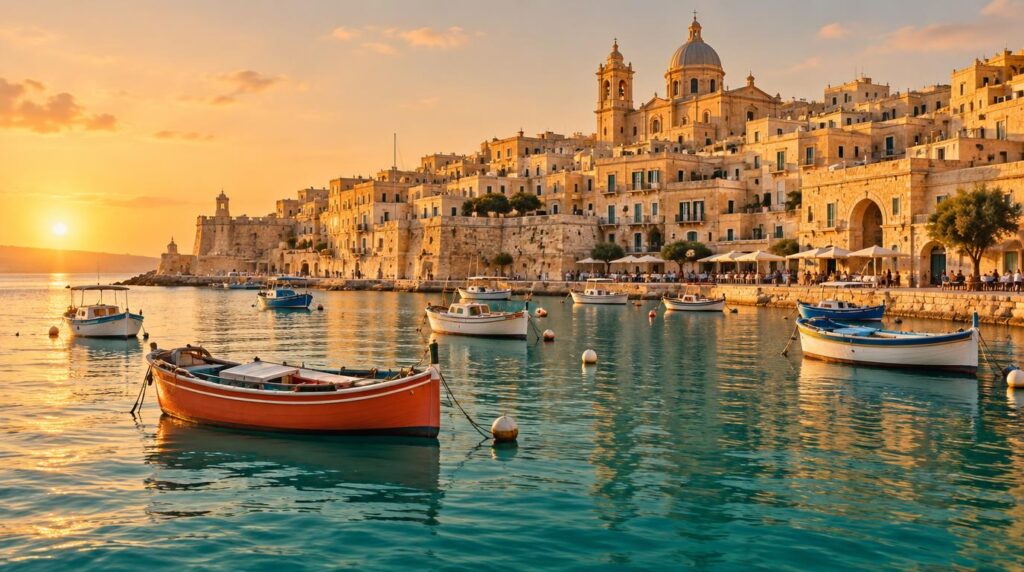
Malta’s Nomad Residence Permit uses one income figure for the whole household. Several guides say the figure does not rise as family members are added.
- Income: €42,000 gross per year, or about €3,500 a month, from remote work.
- Who can join: A spouse or partner and dependent children, listed on the first application.
- Fees: €300 per person to apply, plus about €27.50 per residence card.
- Length: 1 year, renewable up to 4 years.
Family members can be added only at the first application or at renewal, with an exception for newborns. One guide notes that Residency Malta checks whether the income can support the whole household, so a family may want to show more than €42,000. The permit does not allow work inside Malta.
Best for: families who want one flat income figure and plan to stay several years.
3. Colombia
Colombia’s digital nomad visa has one of the lowest income bars on this list. A spouse, partner, and children can be added as beneficiaries.
- Income: Three times the monthly minimum wage, which is COP 5,252,715 in 2026 or roughly US$1,300 to US$1,400, shown for each of the last three months.
- Who can join: A financially dependent spouse or permanent partner, children up to age 25, and children of any age with a qualifying disability.
- Fees: Each beneficiary pays the same government fees as the main applicant.
- Length: Up to 2 years.
Marriage and birth certificates usually need an apostille and a translation. Because the income rule is set in pesos, the dollar amount moves with the exchange rate. One guide says the visa does not count toward residency.
Best for: families with a modest remote income who want up to two years in one place.

4. Costa Rica
Costa Rica’s remote worker stay lets a family apply together at a higher income figure. The stay is open to people who earn from employers or clients outside the country.
- Income: $3,000 a month for one person and $4,000 a month with dependents, from sources outside Costa Rica.
- Who can join: A spouse or partner, unmarried children under 25, and children of any age with a disability.
- Insurance: Health insurance of at least $50,000 for each person.
- Fees: $100 per applicant.
- Length: 1 year, renewable once.
One source says the $4,000 figure does not rise with each extra child. Sources disagree on the family figure, and some list $5,000, so the current amount should be confirmed before filing. The stay does not lead to permanent residency.
Best for: families who want a warm-weather base for up to two years and have steady foreign income.
5. Croatia
Croatia’s digital nomad permit allows stays of up to 18 months. The income figure rises by a small amount for each family member.
- Income: €3,622.50 a month in 2026, or savings of €43,470 for 12 months or €65,205 for 18 months.
- Family add-on: About €145 a month per family member, which is 10 percent of Croatia’s average net salary.
- Who can join: A spouse, an unmarried partner, and minor children.
Guides disagree on how the 10 percent is calculated. Most apply it to the average net salary, about €145 per person, while at least one applies it to the main figure and gets a larger total. Some guides also say family members apply for reunification after the main permit is granted. The order of steps should be confirmed with the Ministry of the Interior (MUP).
Best for: families who want a coastal Europe base for a year or more and can show savings or six months of income.
6. Portugal
Portugal’s D8 visa comes in two forms. Guides describe only the longer residency route as open to family, including a spouse, children, and dependent parents.
- Income: €3,680 a month for the main applicant, which is four times Portugal’s 2026 minimum wage.
- Family add-on: Published guides add 50 percent for a spouse and 30 percent for each child.
- Savings: €11,040 for the main applicant, plus €5,520 for each extra adult and €3,312 for each child under 18.
- Who can join: A spouse or partner, children, and dependent parents.
Under the 50 percent rule, a couple would need about €5,520 a month. Guides differ on how the family figures are calculated, so the consulate’s current checklist should be confirmed. The one-year temporary stay version does not include family, although relatives can join later through family reunification once the main applicant holds a residence permit.
Best for: families who plan to spend two years or more in Portugal and have savings.
7. Thailand
The Destination Thailand Visa has a separate category for dependents. It relies on a savings figure instead of a monthly income test.
- Funds: 500,000 baht in savings, usually held for about three months before applying.
- Who can join: A legal spouse and unmarried children under 20, who apply after the main holder is approved.
- Fees: 10,000 baht per person.
- Length: 5 years, with up to 180 days per entry and one 180-day extension.
Guides disagree on whether each dependent must show their own 500,000 baht. Some say yes, which would put a family of four at 2 million baht. Children who turn 20 need a different visa category. Applications go through the Thai embassy that covers the applicant’s country of citizenship or legal residence.
Best for: families with savings in the bank and children under 20.

8. Greece
Greece’s digital nomad visa raises the income figure by a set percentage for each family member. Dependents receive permits for the same period as the main applicant.
- Income: €3,500 a month after tax for the main applicant.
- Family add-on: 20 percent more for a spouse or partner and 15 percent more for each child.
- Example: A couple needs about €4,200 a month.
- Who can join: A spouse or registered partner and children under 18.
- Work: Most sources say dependents cannot work in Greece.
A couple with one child needs about €4,725 or €4,830, depending on whether the child percentage is applied to the base figure or to the couple’s figure. The consulate can confirm the method. Dependents can live, study, and use healthcare in Greece.
Best for: families with a higher steady income where one adult handles all the remote work.
Where to Go Next
Matching these family income figures to real monthly earnings can narrow the list to two or three countries quickly. Once the shortlist is ready, search flights for the whole family on FlyBibe to compare routes to Barcelona, Valletta, Lisbon, or Bogota. A base that fits both the visa rules and the school year makes the first few months much easier.