
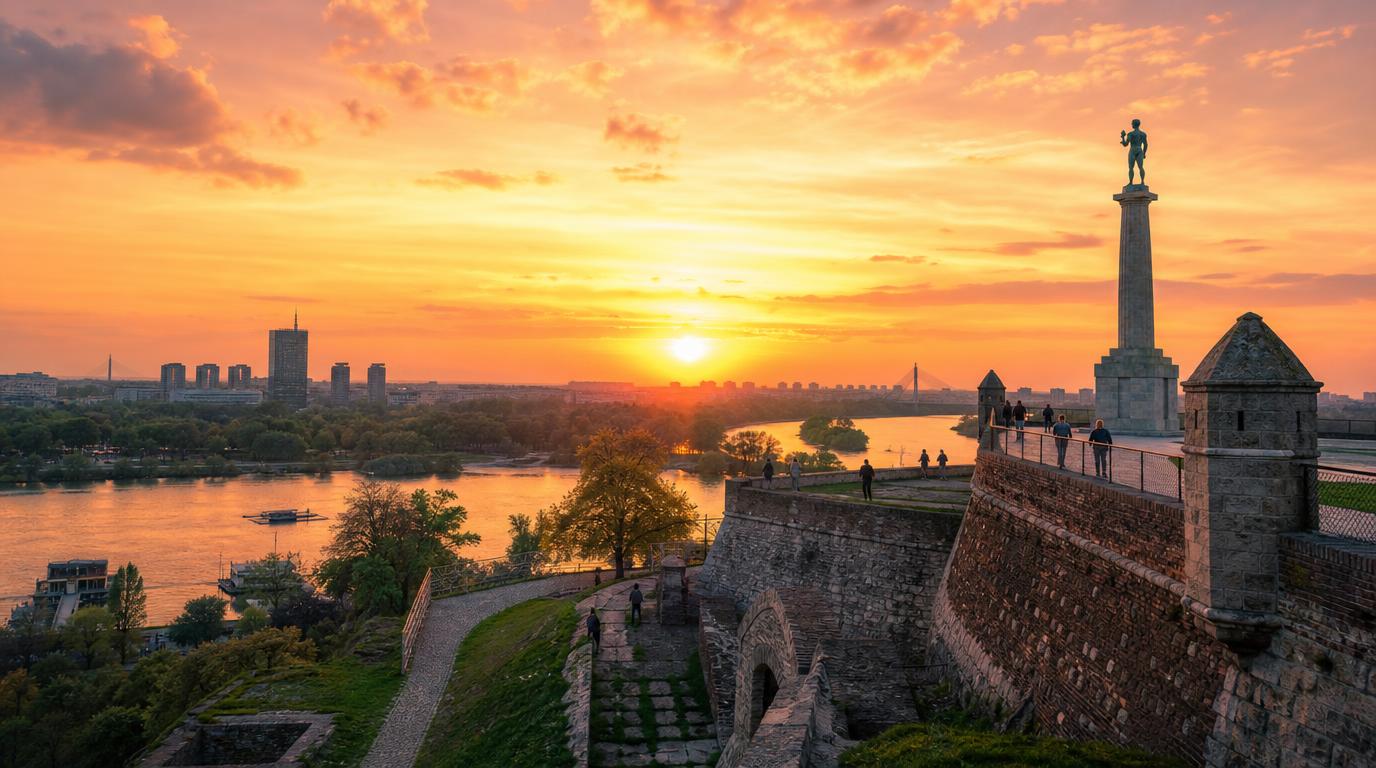
Belgrade works as a base for remote workers who want low costs and fast city-center internet. This guide covers wifi speeds, rent, the visa reality, coworking, safety, and the best months to arrive.
Internet Speed
Belgrade’s broadband holds up well against most European capitals.
- Average city broadband: 125 Mbps download, 74 Mbps upload, with latency around 17ms, based on 12 months of user tests through March 2026.
- Fastest fixed provider: Yettel led broadband speeds over that period at 158 Mbps download.
- Mobile speed: the fastest mobile network averaged 142 Mbps download.
- National context: Serbia’s countrywide median real-world speed sits closer to 34 Mbps, so connections outside Belgrade and other major cities can run noticeably slower.
A city-center apartment or a coworking desk in Belgrade should handle video calls and large uploads without much complaint. Save the rural Airbnb outside the capital for a slower, less predictable connection.
Cost of Living
Belgrade sits well below Western Europe on cost while remaining the priciest city in Serbia.
- One-bedroom rent, city center: roughly €780/$840 a month on average, ranging from about €550 in Zvezdara or Voždovac to over €1,020 in Vračar or Stari Grad.
- Groceries and dining: a working food budget, including some eating out, runs about €500-650 a month for one person.
- Coworking: €10-20 a day for a hot desk, or €120-250 a month for a dedicated desk.
- Local transport: Belgrade’s buses, trams, and trolleybuses are free to ride for everyone, a rare perk among European capitals.
- Total monthly budget: most single remote workers land between $1,300 and $1,700 a month including rent.
Rent estimates vary by source and neighborhood, and some older listings quote figures well below current averages. Treat any single number as a starting point and check live listings before signing a lease. Even at the higher end, Belgrade costs a fraction of Lisbon or Barcelona for a comparable one-bedroom in the center.
Visa and Entry
Serbia has no visa officially branded as a “digital nomad visa,” but it has a workable substitute.
- Visa-free entry: most US, UK, EU, Canadian, and Australian passport holders can enter without a visa and stay up to 90 days in any 180-day period.
- Longer stays: remote workers who want to stay past 90 days apply for a Temporary Residence Permit through self-employment or entrepreneur registration, known locally as “preduzetnik,” valid for up to three years and renewable.
- Processing time: typically around 15 days once the application is complete.
- Fees: the residence permit itself runs about 22,700 RSD, roughly €195, plus a small submission fee. Visa-required nationals also need a Visa D, about €50, before applying.
- Proof of funds: requirements vary sharply by source. Some cite a minimum bank balance of €500-1,000, others describe immigration officers wanting to see closer to €3,500 a month in income, and one source lists an annual threshold near $42,000. None of these figures are fixed in law, so confirm current requirements with a Serbian embassy or an immigration lawyer before applying.
- Path to residency: three years of continuous temporary residence can lead to permanent residency, with no annual renewal required after that point.
The lack of a marketed nomad visa leads some remote workers to assume Serbia has nothing to offer. In practice, entrepreneur registration is faster and cheaper than several EU nomad visas that get more attention online.
Timezone Fit
Belgrade runs on Central European Time, UTC+1 in winter and UTC+2 in summer.
- UK: one hour ahead, an easy overlap across most of the workday.
- Central Europe: the same time zone, no adjustment needed.
- US Eastern: six hours ahead, workable with an early morning or late afternoon call.
- US Pacific: nine hours ahead, tougher to sync without a very early or very late call.
Belgrade fits European and UK-based teams well. Anyone syncing daily with US West Coast colleagues will need more flexibility.
Coworking and Community
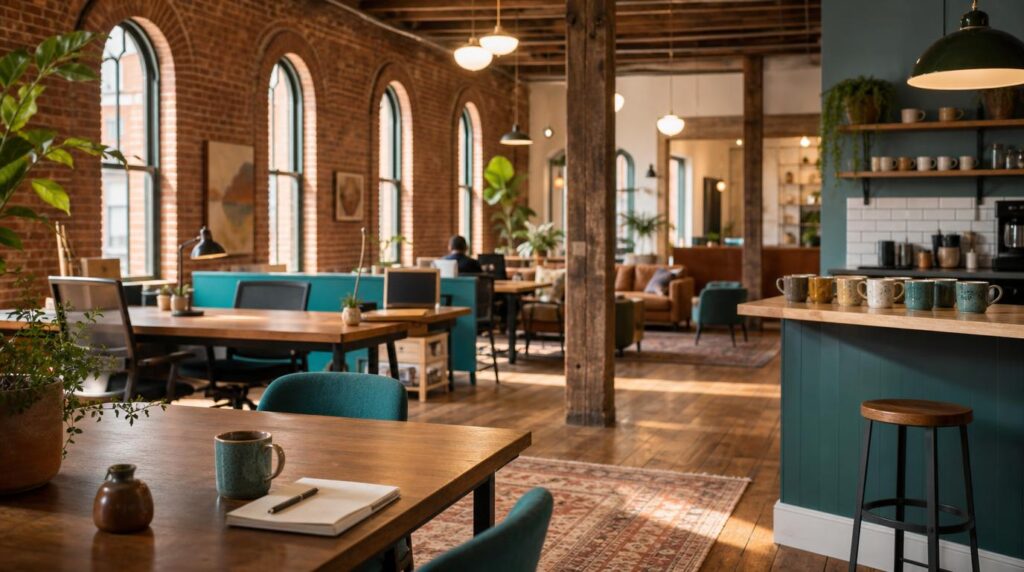
Belgrade’s coworking scene has grown enough to offer real choice, not just one obvious option.
- Impact Hub Belgrade: housed in the historic Radio Belgrade building in Savamala, with hot desks, private offices, and a rooftop terrace.
- Nova Iskra: a design-focused space in Savamala known for fiber wifi and a garden courtyard, popular with freelancers and small creative teams.
- Smart Office: Belgrade’s first coworking space, on the pedestrian street Knez Mihailova, geared more toward permanent desk members.
- Startit Centar and ICT Hub: startup-oriented spaces with an active local tech community and regular meetups.
- Pricing: most spaces charge €10-20 a day, or €120-250 a month for a dedicated desk, with private offices from €300-800 a month.
Savamala and Stari Grad hold most of the well-known spaces. Basing an apartment nearby cuts the commute to almost nothing.
Safety
Belgrade earns a fairly reassuring safety record for a European capital its size.
- Violent crime: low. Serbia’s homicide rate sat at about 1.4 per 100,000 people in 2025, with no significant change from the year before.
- Petty crime: pickpocketing shows up in crowded tourist areas, on public transport, and at train and bus stations.
- Political activity: protests have occurred regularly since late 2024, usually peaceful but occasionally disruptive to traffic and transit. Some foreigners have been detained while attending.
- Sports events: clashes near stadiums during Red Star and Partizan derbies happen. Avoid the immediate area around match venues on game days.
- Getting around: use licensed taxis or ride-hailing apps such as CarGo or Pink Taxi rather than hailing an unmarked car.
Belgrade doesn’t demand the heightened vigilance that some nomad hubs do. Anyone staying months rather than weeks should still keep an eye on protest schedules and match days.

Best Time to Visit
Belgrade rewards timing a stay around its shoulder seasons.
- Best window: late May through June, and again from late August through mid-October, when temperatures stay mild and outdoor cafe terraces fill up.
- Peak heat: mid-July through late August climbs into the low 30s Celsius, high 80s Fahrenheit, and can feel muggy.
- Winter: December through February runs cold, with daytime highs often near freezing and quieter streets.
- Events worth planning around: the Belgrade Marathon in April, the BELEF summer festival in June, and BITEF, the city’s international theatre festival, in September.
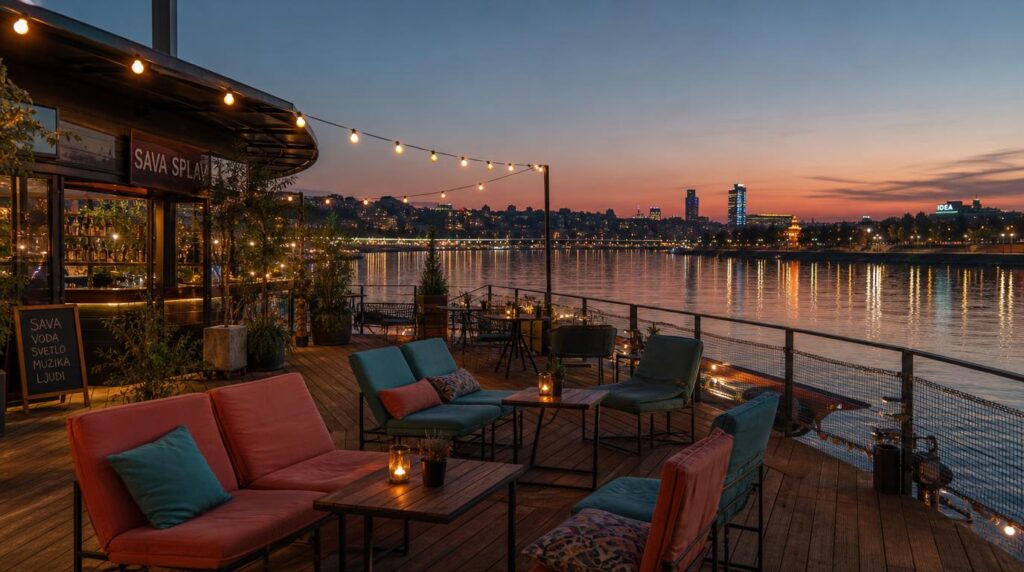
Arriving in spring or early autumn gets the best of Belgrade’s outdoor culture: the riverside splavovi, Kalemegdan Park, cafe terraces. Summer heat and winter cold both work against a steady daily routine.
Who Belgrade Is For
Belgrade suits remote workers who want low costs, dependable city internet, and a European base without paying Western European rent.
- Good fit: freelancers ready to register on the entrepreneur residence track, anyone syncing mainly with UK or European teams, and nomads who want nightlife and history alongside their workday.
- Consider skipping: nomads who need year-round overlap with US Pacific hours, or anyone who specifically wants an official “digital nomad visa” stamp rather than Serbia’s entrepreneur registration route.
Search Flights to Belgrade
Belgrade delivers fast citywide wifi, real coworking options, and one of Europe’s more affordable capitals. It also offers a legal path to stay past 90 days through entrepreneur registration. Time a trip around the shoulder seasons for the best weather and festival calendar. Search flights to Belgrade on FlyBibe and start planning the move.